An AI answering service picks up your business calls with a natural-sounding voice, answers questions, takes messages and books appointments. Prices start around $25 a month, but providers bill by the minute, the call or the caller, so the "starting at" numbers don't compare.
This guide explains how these services work, what six of them actually cost today, and what owners who've used them say. Every price and quote below is from a screenshot taken in October 2026.
What is an AI answering service?
It's a phone answering service where the receptionist is software instead of a person. It answers in your business name, 24/7, using information about your business that you give it.
A traditional answering service charges for a person's time, so plans with included minutes start around $99 for 50 minutes. An AI service has no per-person cost, so the same money covers far more calls.
Some providers call it an "AI receptionist" instead. For the difference between AI and human receptionists, see our guide to what a virtual receptionist is.
Why businesses use one
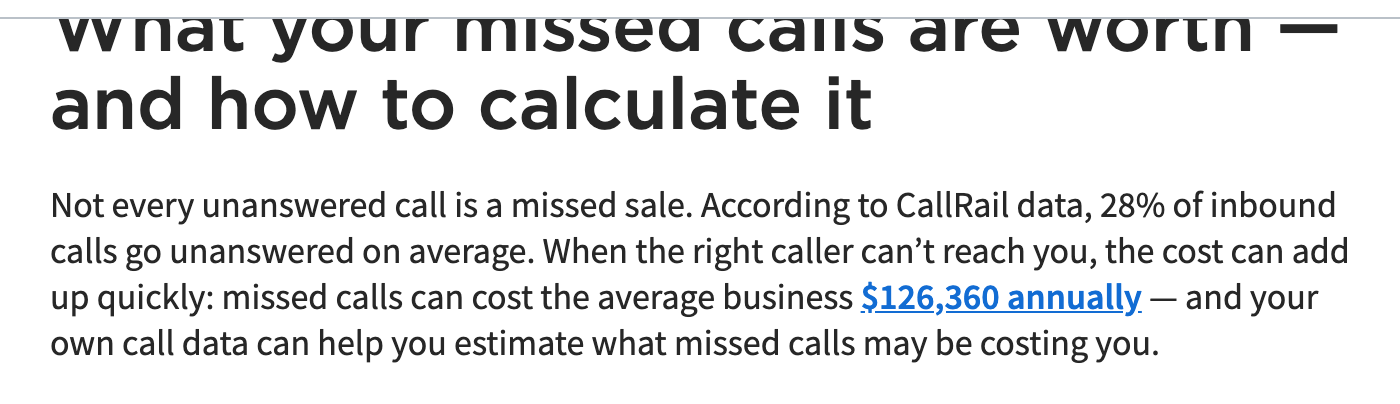
The short answer is missed calls. CallRail, a call-tracking company, says 28% of inbound calls to the businesses it tracks go unanswered.
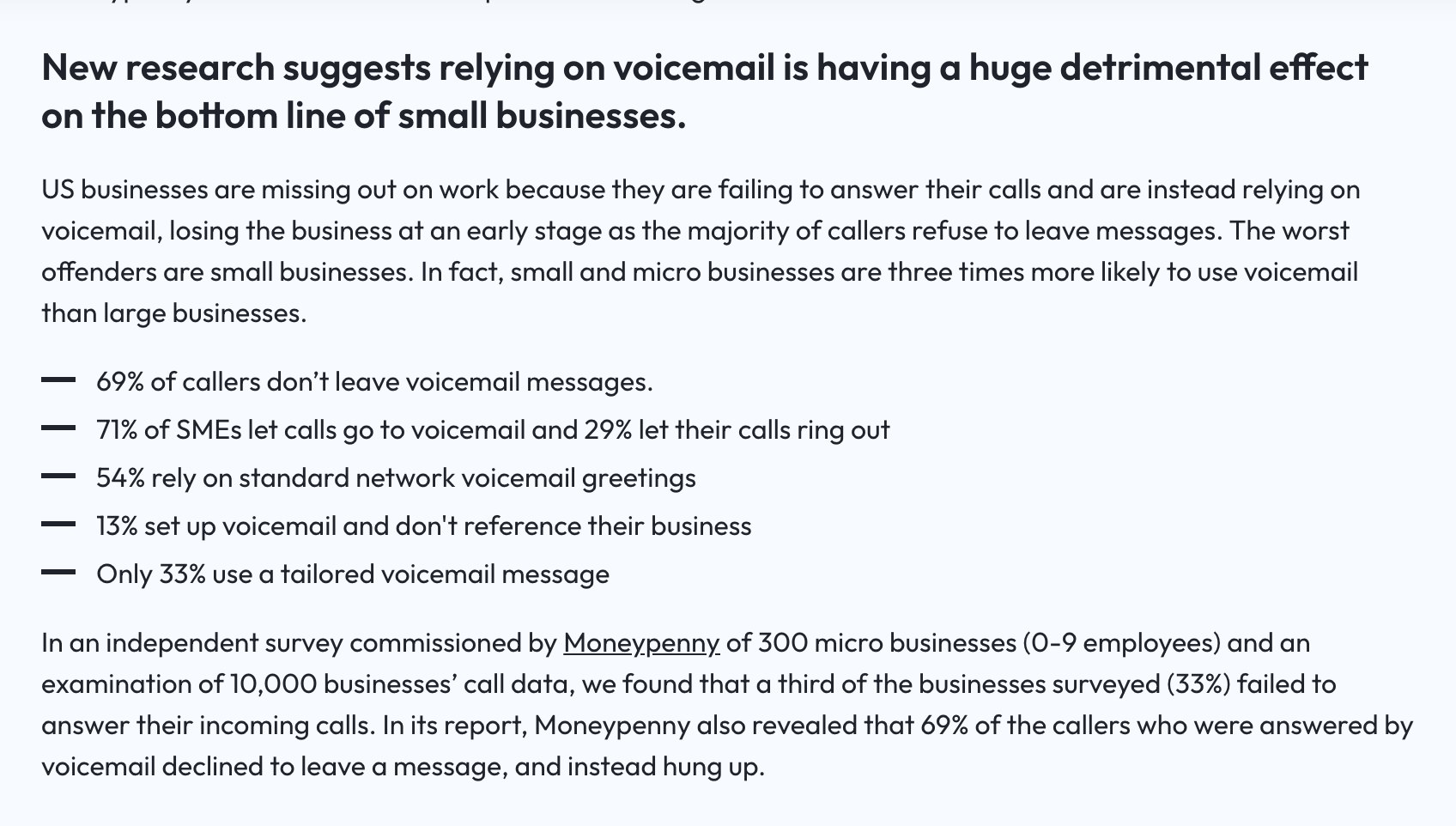
Voicemail doesn't catch most of them. In an older Moneypenny study, 69% of callers who reached voicemail hung up without leaving a message.
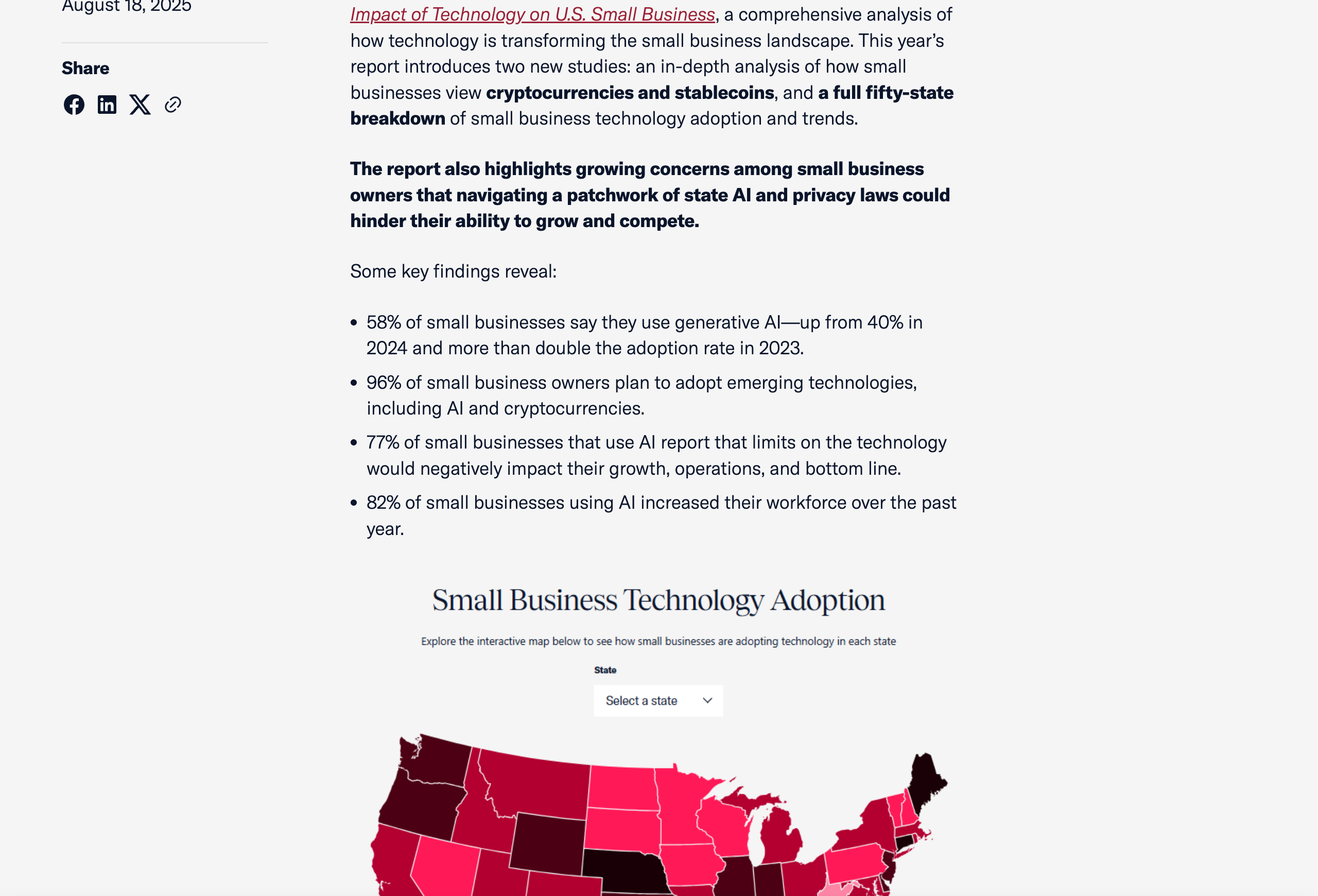
Small businesses are already comfortable with AI in general. The U.S. Chamber of Commerce found 58% of small businesses use generative AI, up from 40% a year earlier.
We couldn't find any independent data on how many small businesses use AI answering specifically. The numbers you'll see on vendor blogs don't say where they came from.
How an AI answering service works
The details vary by provider, but the setup and the call flow are almost always the same five pieces. We've used two providers' public help docs to show each step.
1. You forward your calls to it
You keep your business number. You turn on call forwarding so calls go to the service, either all of them or only the ones you miss.
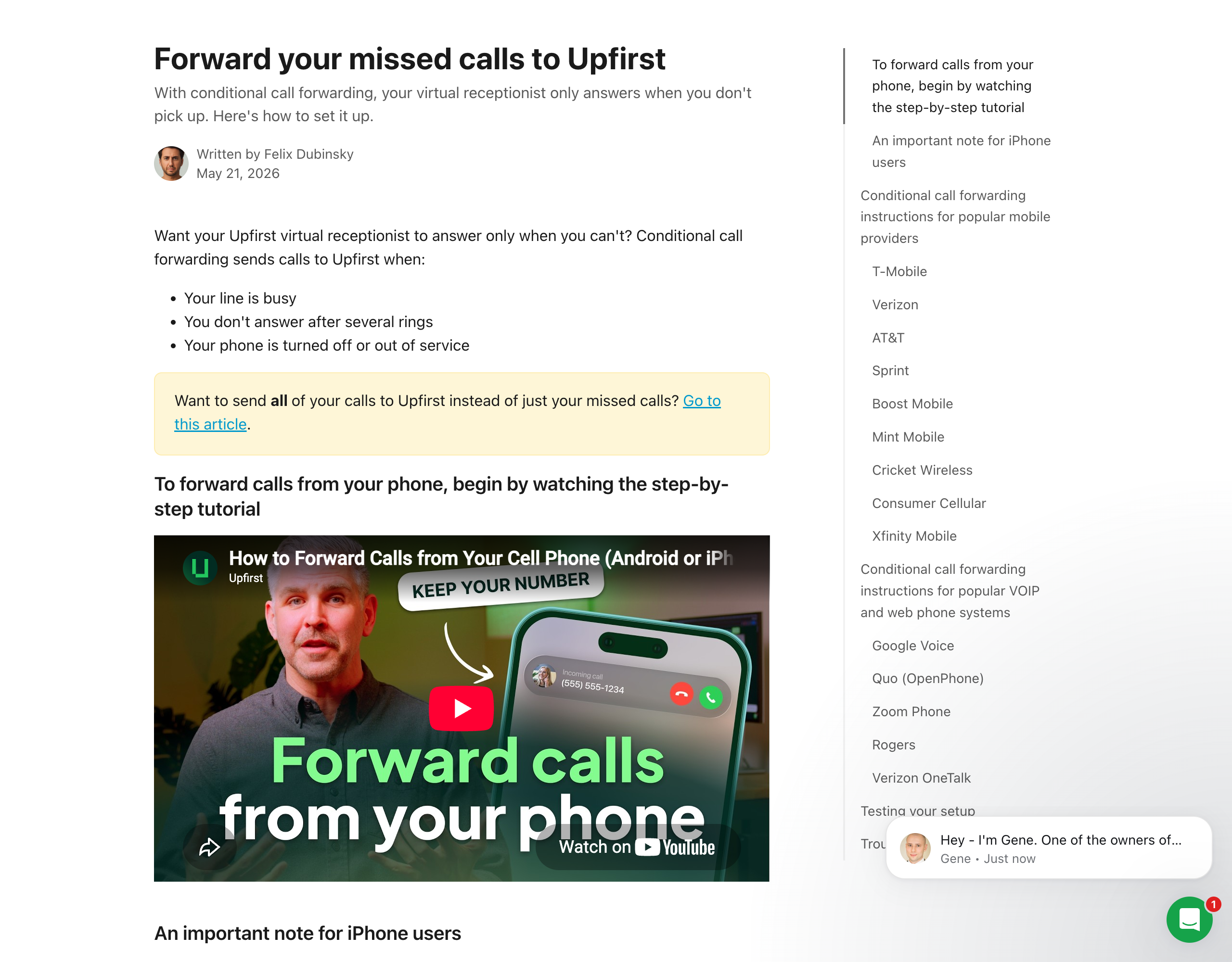
On an iPhone, Upfirst warns that you need to turn off Live Voicemail first, or calls go to voicemail instead. Our call forwarding codes tool has the dial codes for every major carrier.
2. It learns your business
Most services read your website and Google Business Profile to learn your hours, services and service area. You then add FAQs and correct anything it got wrong.
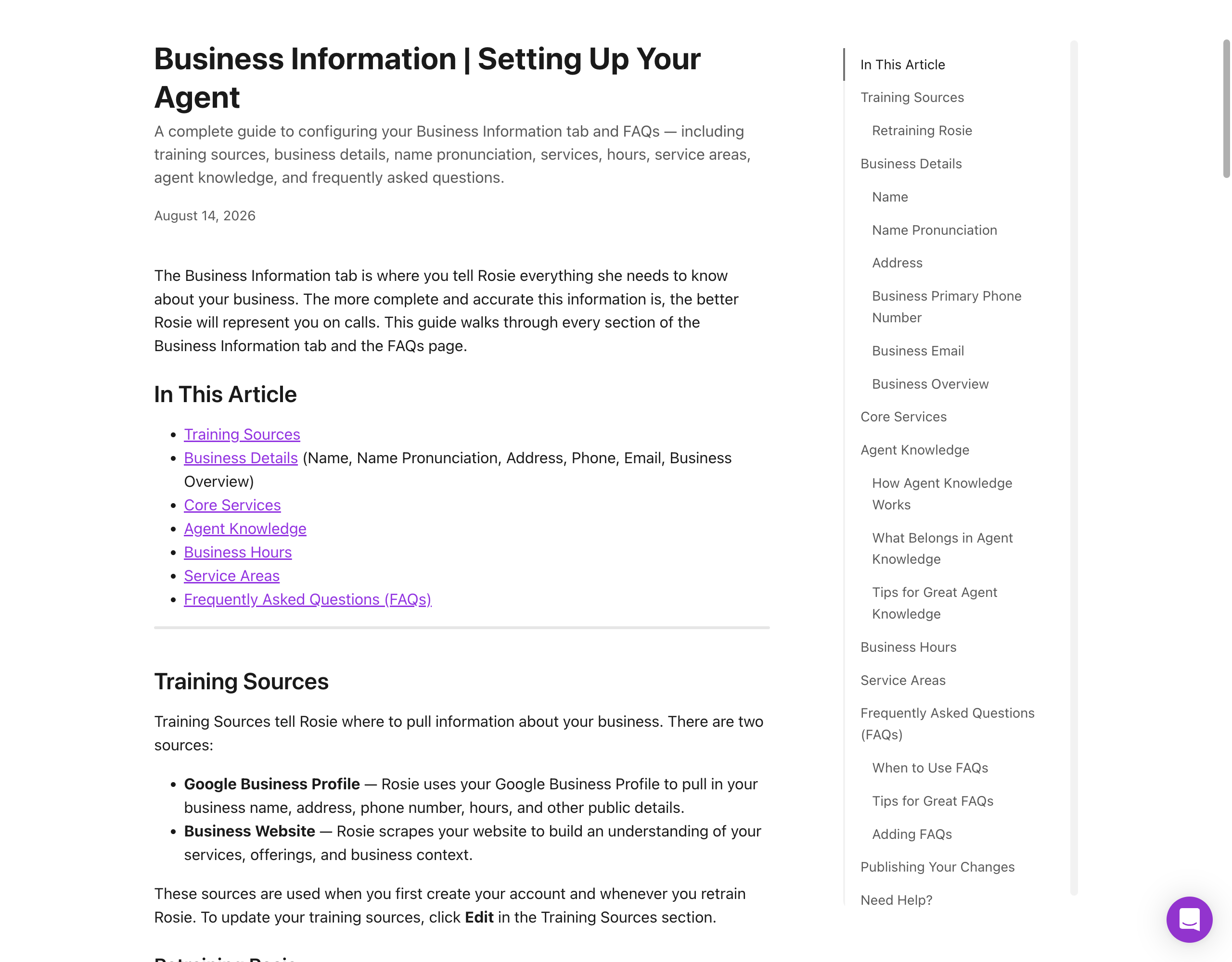
This is the step that decides how good the agent sounds. If your website has old prices or hours, the AI will repeat them.
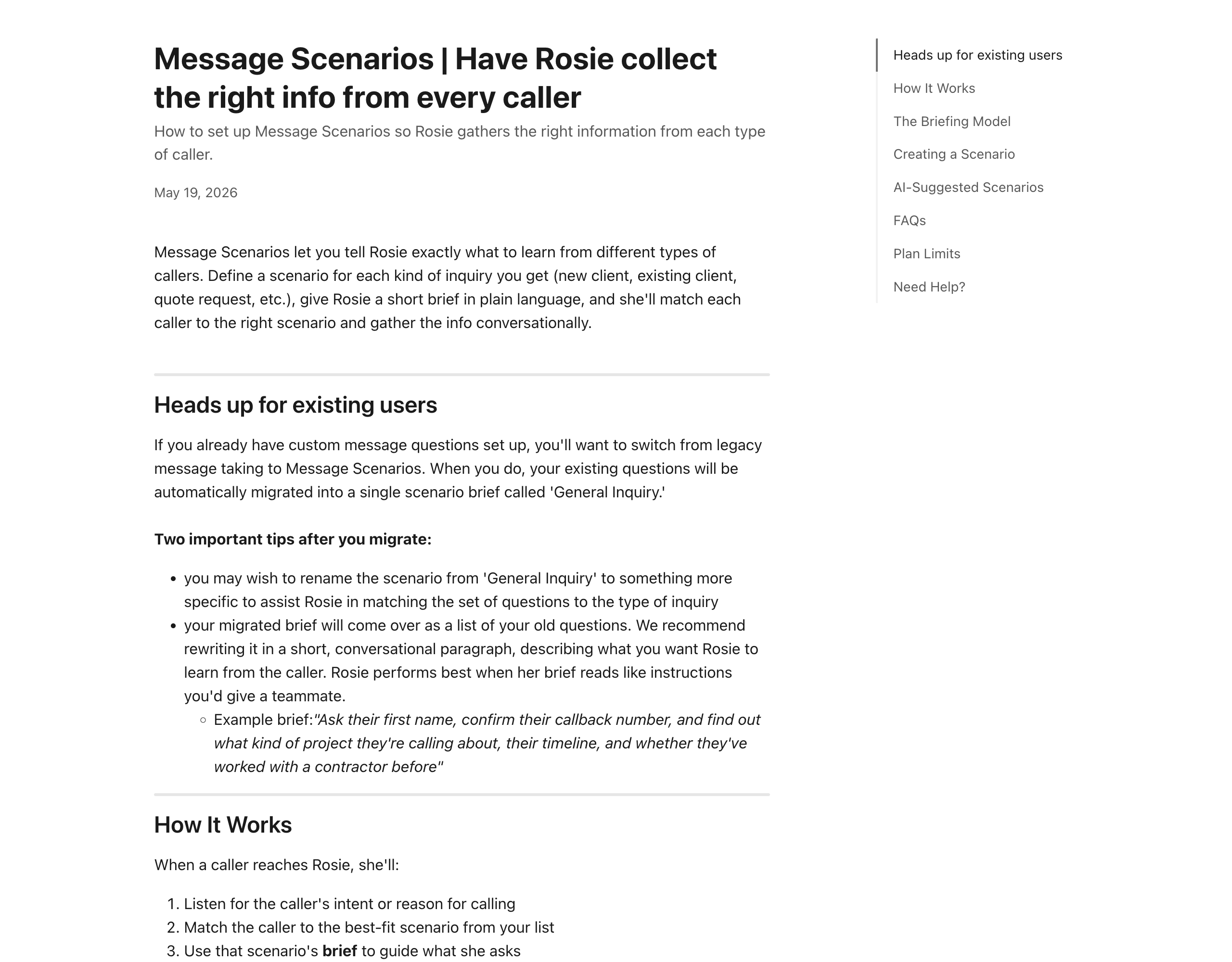
3. It talks to the caller and collects details
The AI figures out why someone is calling, then asks the questions you've set up for that kind of call. A new customer might get asked about their project and timeline, while an existing one just leaves a message.
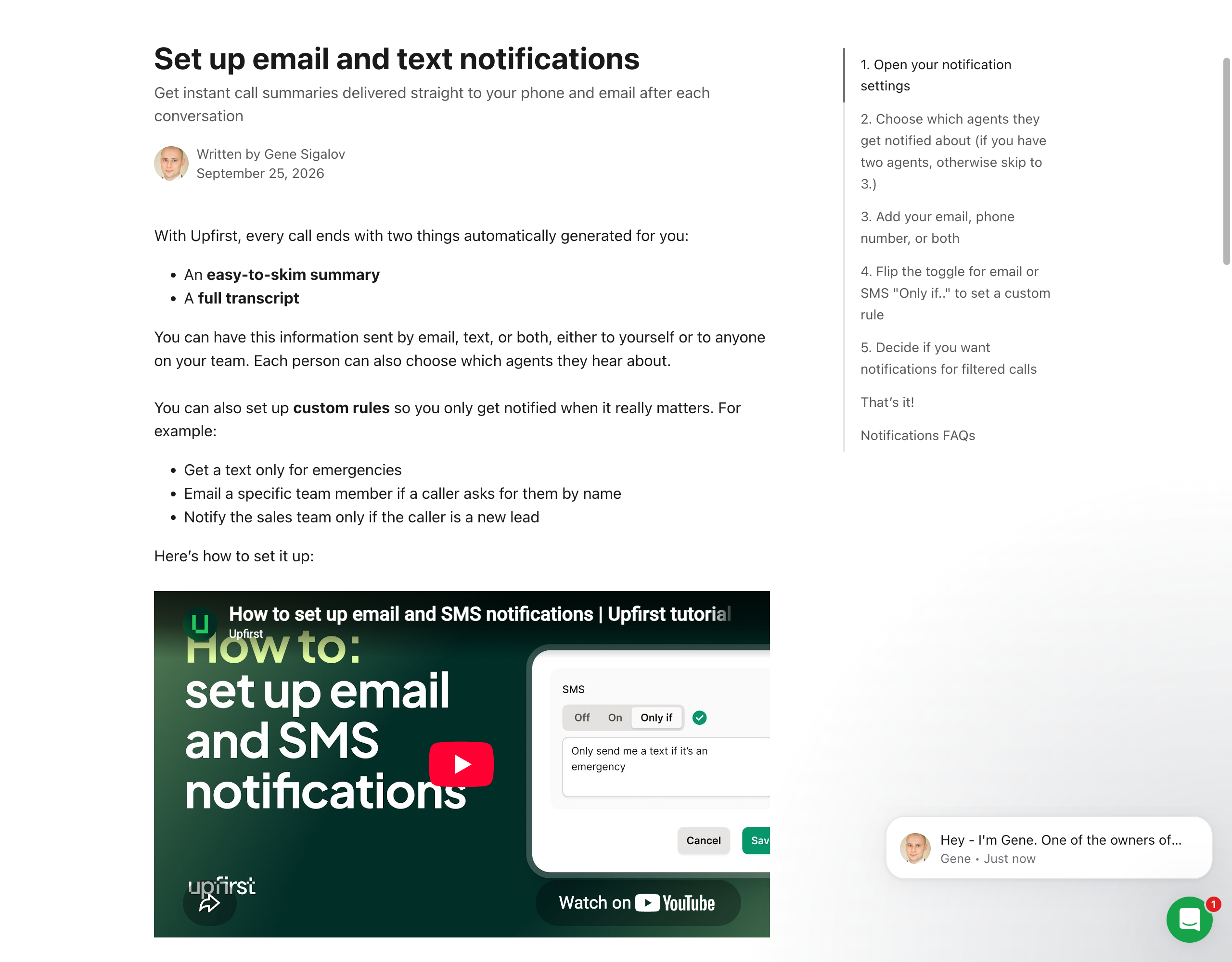
4. It sends you a summary
After each call you get a short summary by text or email, plus a recording and full transcript. Some services let you set rules, like a text only for emergencies.
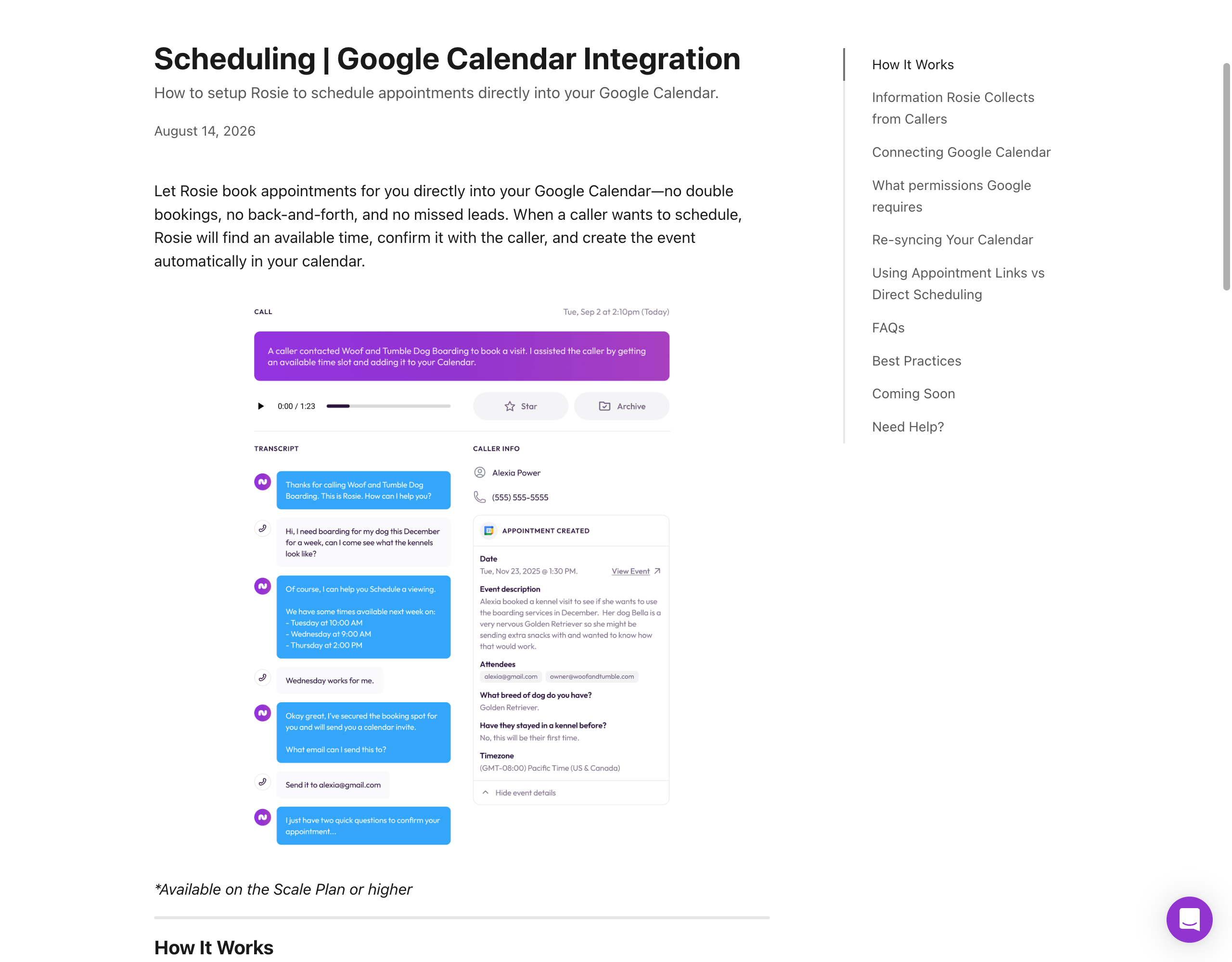
5. It books appointments and transfers calls
With your calendar connected, the AI checks your free times, offers a few options and books the one the caller picks. It can also hand a call to you or a teammate when it can't help.
Transfers come in two main kinds. A cold transfer just connects the call, while a warm transfer calls you first, tells you who's waiting, and lets you accept or decline.
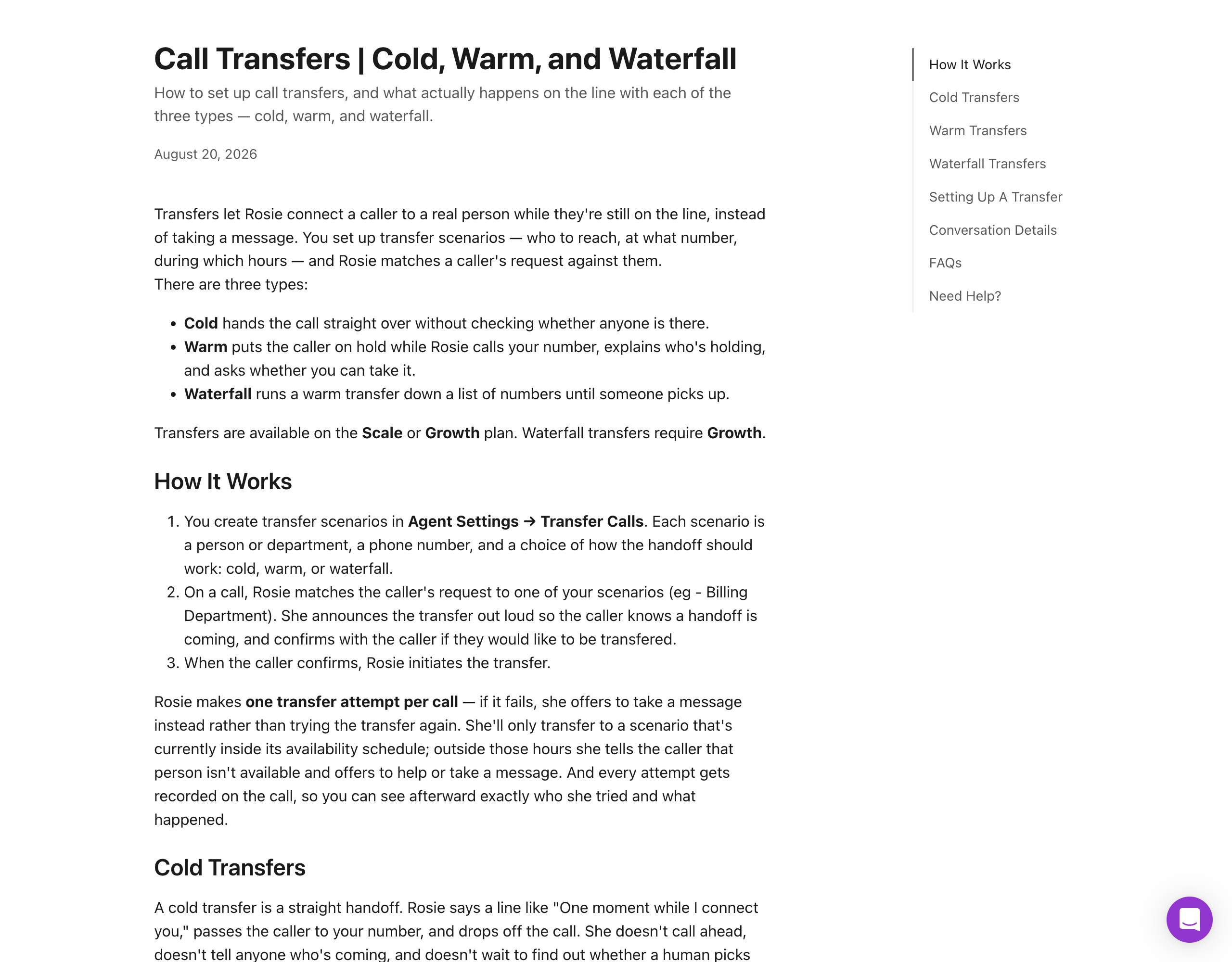
For a deeper look at what the AI is doing on the call, see how AI phone answering works. Our warm vs cold transfer guide covers handoffs in detail.
How much does an AI answering service cost?
Google's own summary says most small businesses pay $50 to $300 a month. That's about right, but it hides two things: what each plan counts, and which features need a more expensive plan.
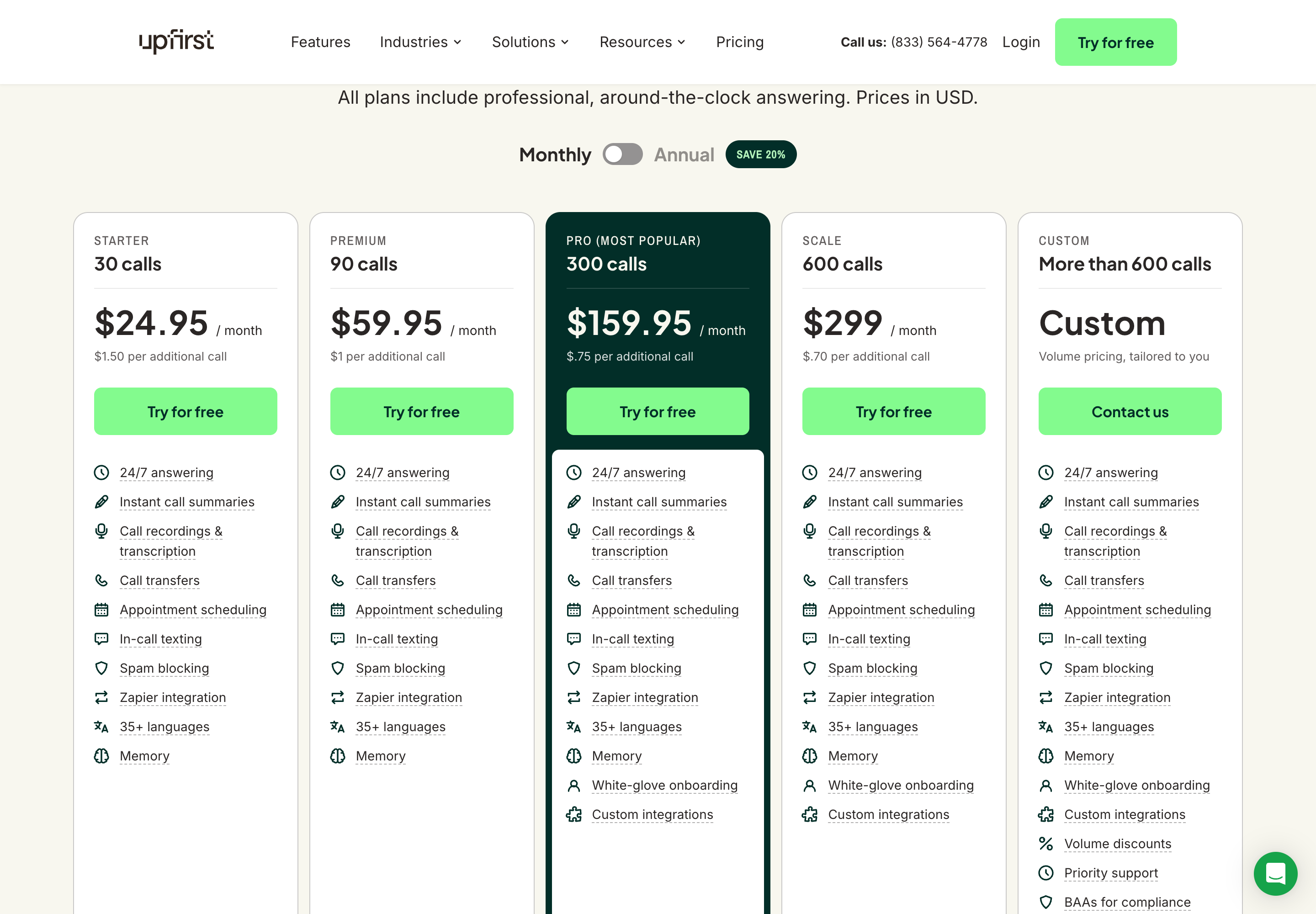
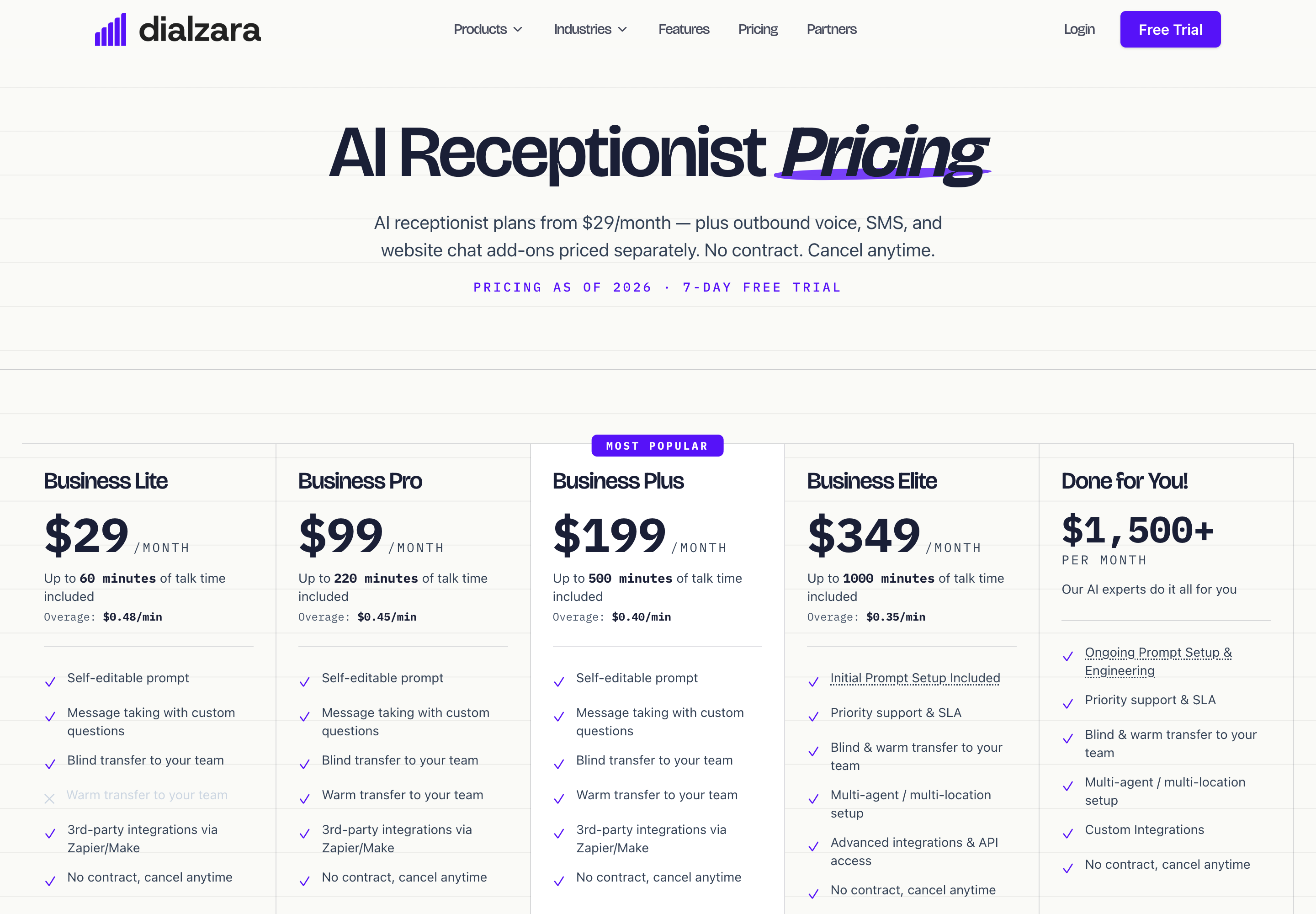
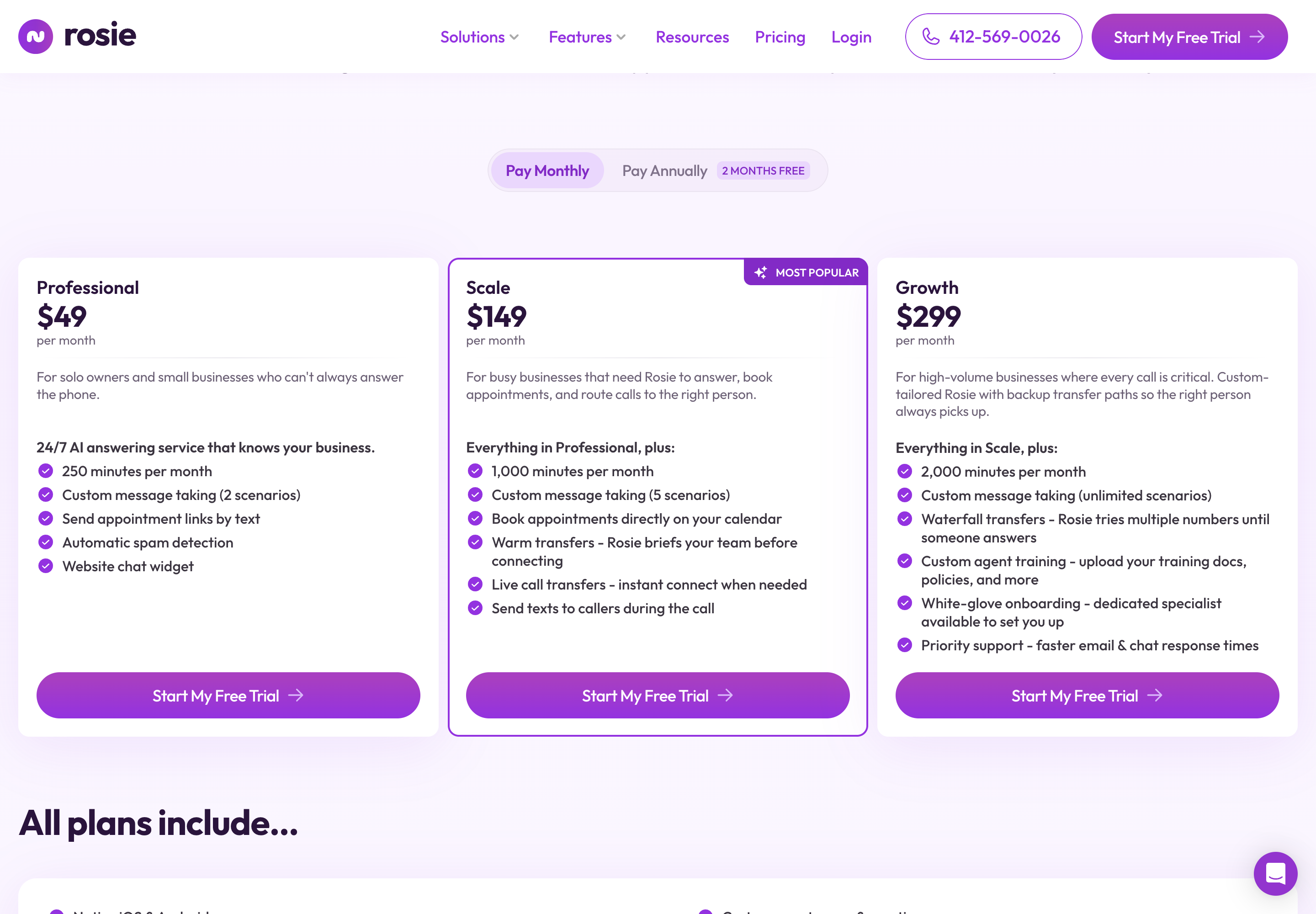
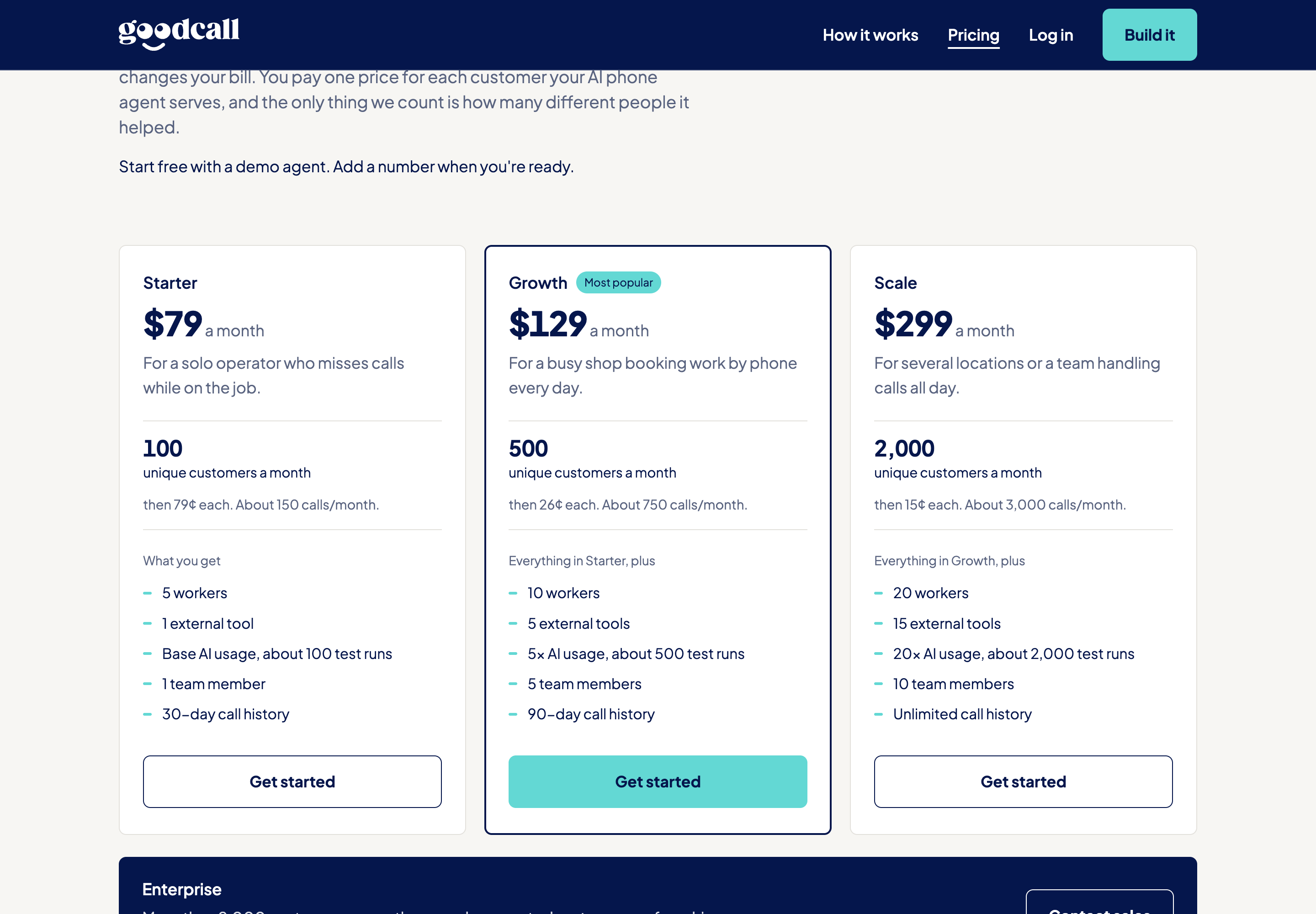
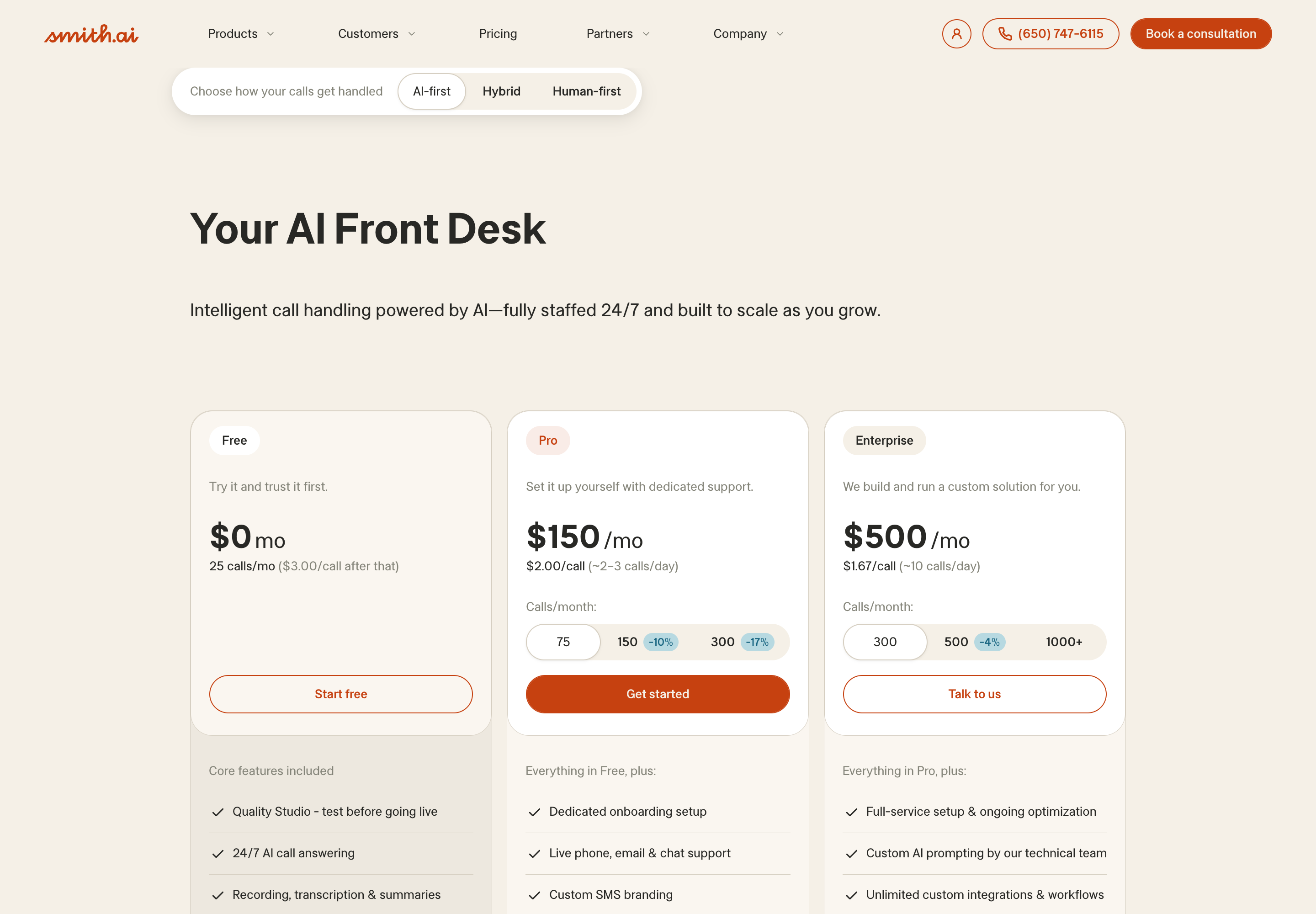
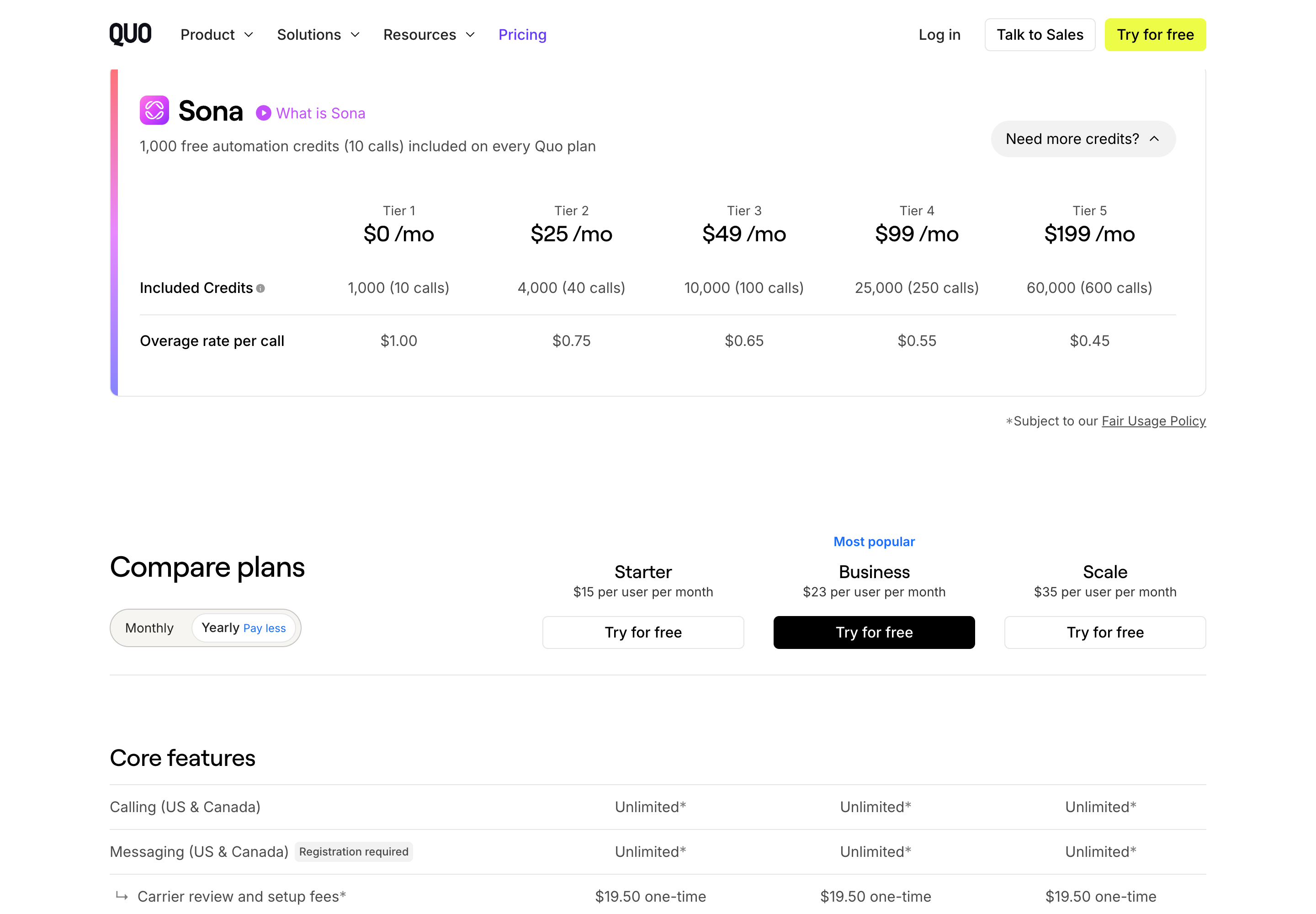
Here are the published prices for six AI answering services, read from their pricing pages on October 26, 2026:
| Service | Cheapest plan | Billed by | Extra usage | Worth knowing |
|---|---|---|---|---|
| Upfirst | $24.95, 30 calls | Call | $1.50 per call | Transfers and booking on every plan |
| Dialzara | $29, 60 minutes | Minute | $0.48 per minute | Warm transfer starts at $99 |
| Rosie | $49, 250 minutes | Minute | Not published | Booking and transfers start at $149 |
| Goodcall | $79, 100 callers | Unique caller | 79¢ per caller | Minutes aren't counted |
| Smith.ai (AI) | Free, 25 calls; Pro $150, 75 calls | Call | $2.50 per call on Pro | Highest per-call price here |
| Quo Sona | 10 calls free with a Quo plan ($15 per user) | Call | $1.00 to $0.45 per call | Only for Quo phone customers |
| Zinng | $49, 300 minutes | Minute | Buy more minutes anytime | Done-for-you setup included |
Prices as shown on each provider's pricing page on October 26, 2026, before taxes; monthly billing except Quo, whose page showed annual pricing. Zinng's own price is from our pricing page.
The screenshots below are what each pricing page showed that day.
Three things to check before you compare prices:
- What the plan counts. A minute, a call and a unique caller are very different units, so a 30-call plan can run out faster than a 250-minute plan.
- Which features are on the cheap plan. Rosie's calendar booking and transfers start at $149, and Dialzara's warm transfers start at $99.
- What doesn't count. Upfirst doesn't bill calls under 15 seconds or spam, and at Zinng, transferred calls and blocked spam don't use your minutes.
For human answering services, see what an answering service costs and the cheapest answering services, with 22 real prices.
What 100 calls a month actually costs
Say you get 100 calls a month, each from a different caller, lasting about 2.5 minutes. That's 250 minutes.
| Service | Plan that fits | Monthly cost |
|---|---|---|
| Rosie | Professional, 250 minutes (no booking or transfers) | $49 |
| Zinng | Essentials, 300 minutes | $49 |
| Quo Sona | Starter plan + 100-call add-on | $64 (yearly billing) |
| Upfirst | Premium, 90 calls + 10 extra at $1 | about $70 |
| Goodcall | Starter, 100 unique callers | $79 |
| Dialzara | Business Pro, 220 minutes + 30 extra at $0.45 | about $113 |
| Smith.ai | Pro, 75 calls + 25 extra at $2.50 | about $213 |
Our math from published prices on October 26, 2026, before taxes. Your call length and repeat callers will change these numbers.
If you need calls booked or transferred, Rosie's price for this example becomes $149. Zinng's $49 plan texts the caller a booking link and transfers to one number; booking live on the call starts at $99.
What owners say about AI answering services
Real experiences on Reddit are mixed, and the useful ones are honest about why. The clearest pattern: AI works best catching overflow and after-hours calls, and worst as the only way to reach you.
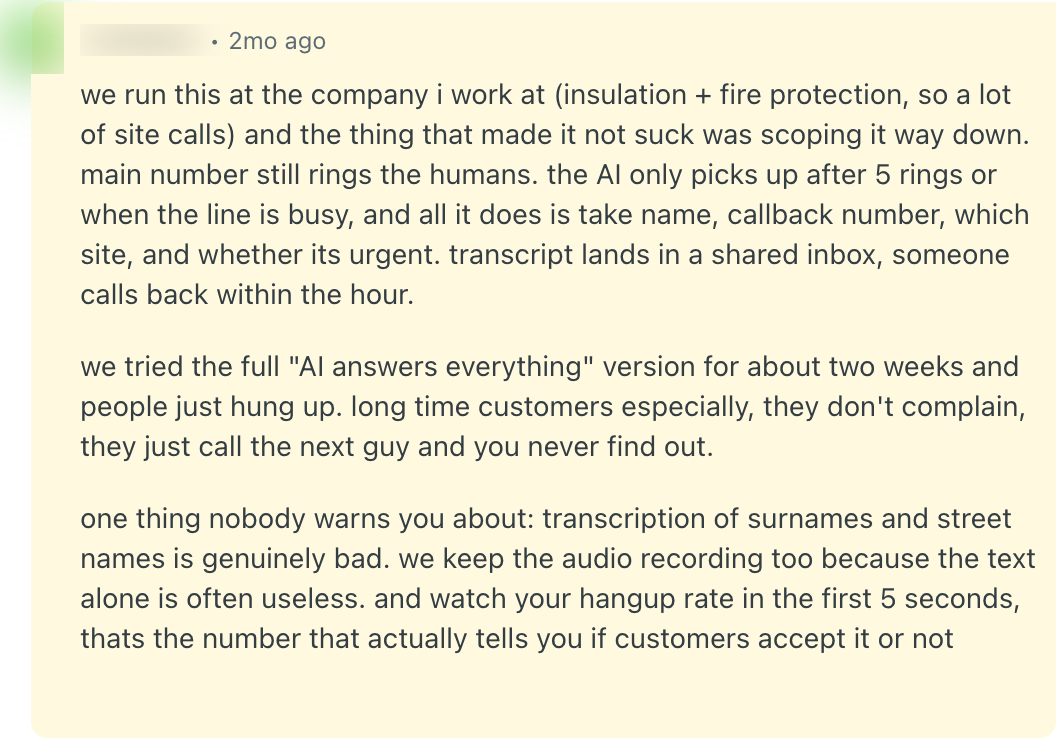
Someone at an insulation and fire protection company described the setup that finally worked for them:
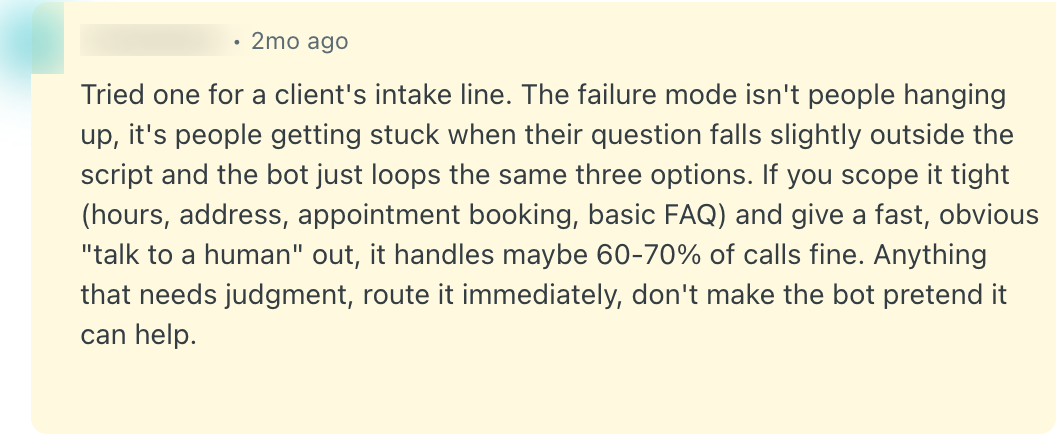
Another commenter who set one up for a client's intake line saw the same thing. Kept to simple jobs with a fast way to reach a person, it handled most calls fine:
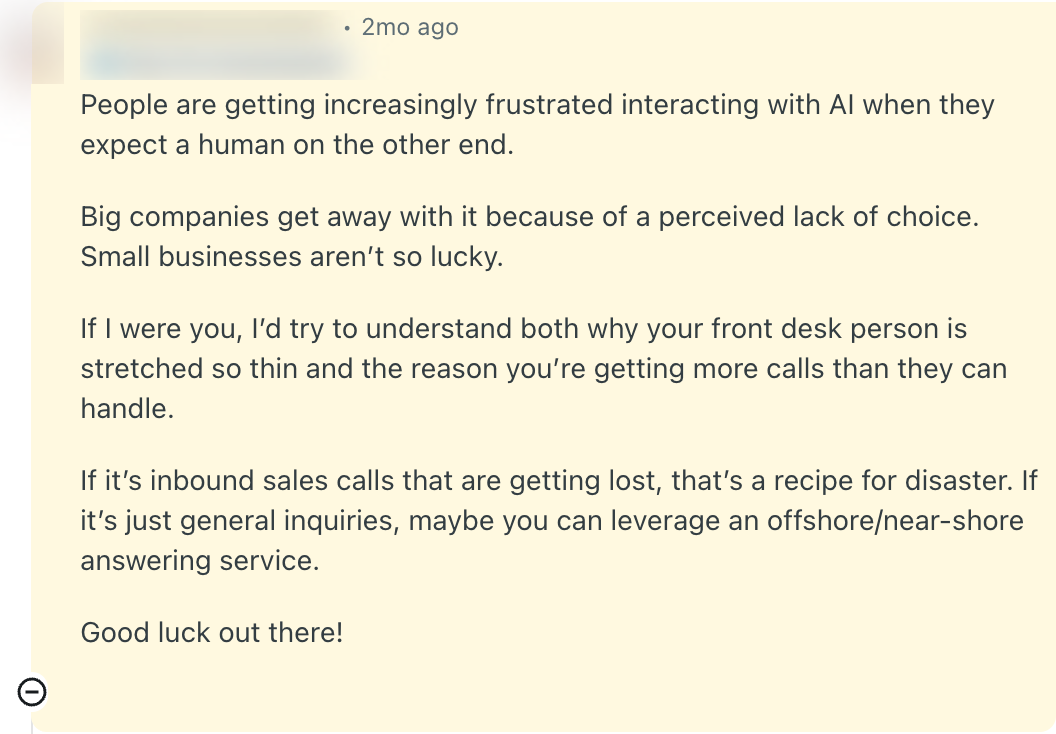
The most upvoted answer in that thread was a warning. Its point is that small businesses can't count on customers putting up with AI the way big companies can:
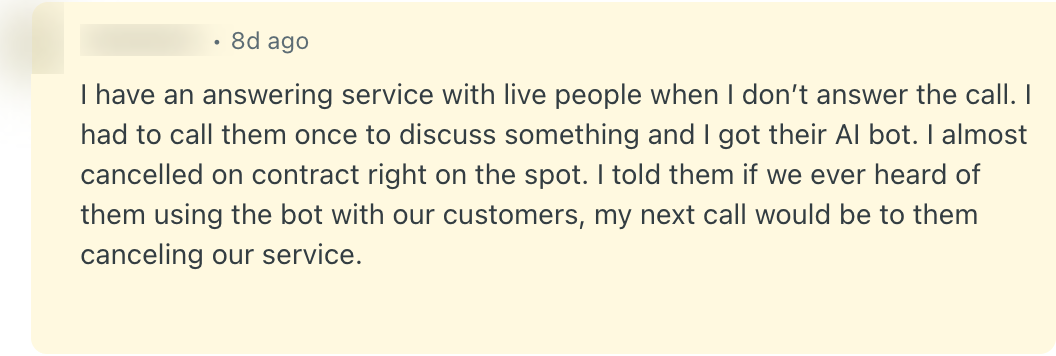
Some owners feel strongly enough to walk away. This one pays a live answering service and almost cancelled after reaching that service's own AI bot:
One more thing you'll notice reading these threads: they're full of vendors posting about their own products. Moderators of r/smallbusiness locked one thread for becoming "a dumping ground for AI spam," so weigh glowing reviews carefully.
Where AI answering services fall short
The vendors admit most of these themselves. Knowing them up front lets you set the service up to avoid them.
Hang-ups
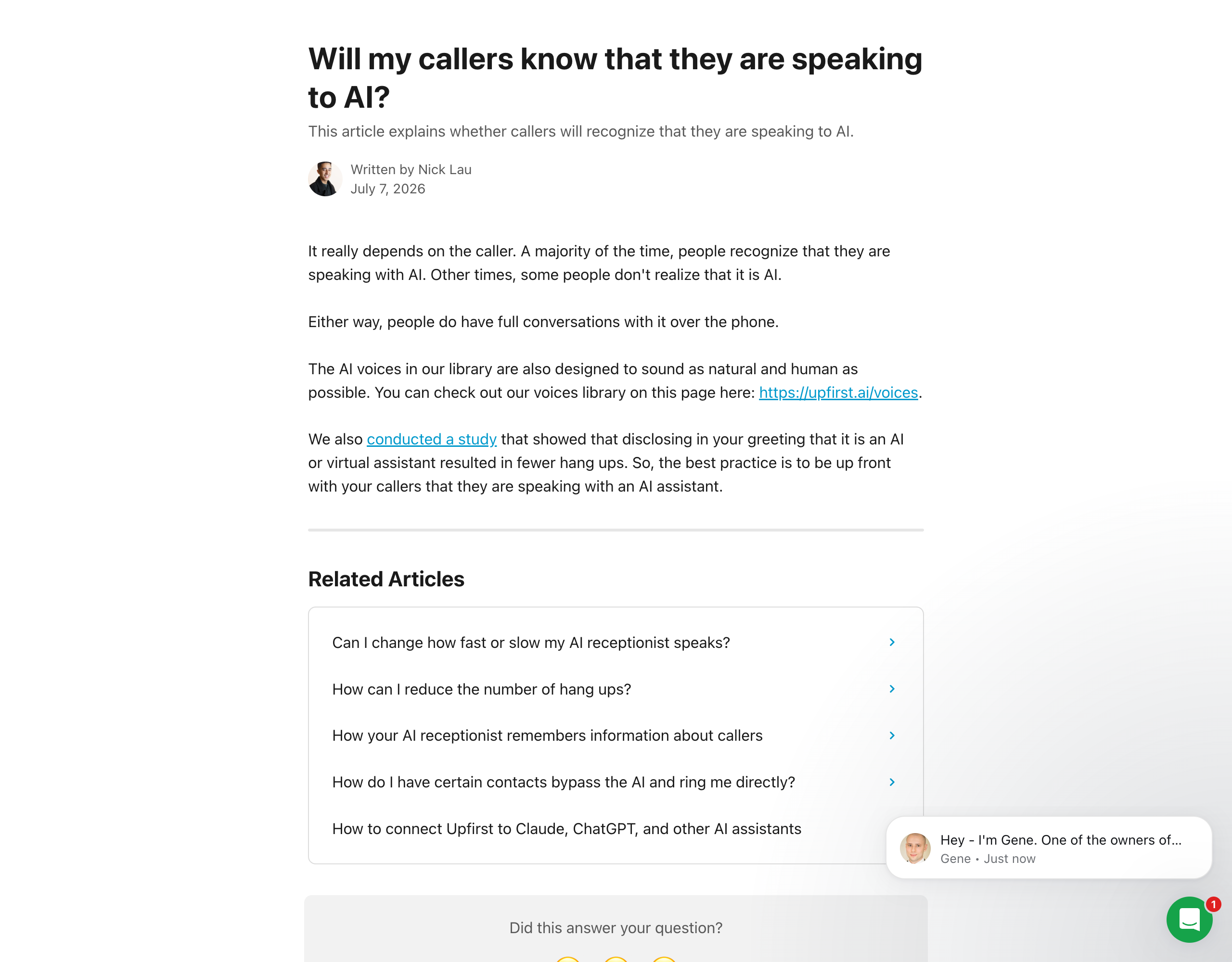
Some callers hang up as soon as they hear AI. Upfirst's own help center opens its article on this with "you're not alone."
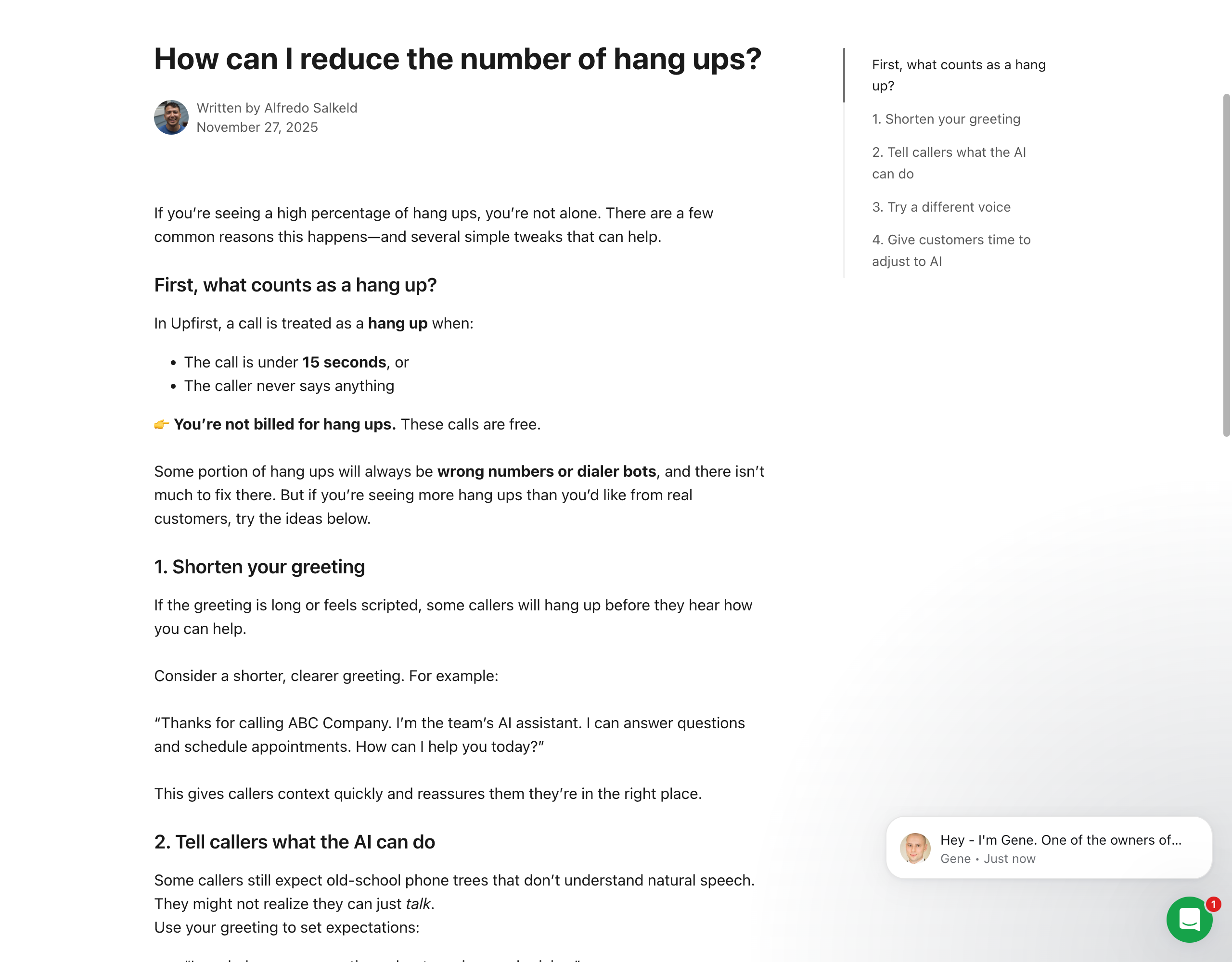
Its advice is to keep the greeting short and tell callers what the AI can do. It also says most callers can tell it's AI anyway, and that saying so up front led to fewer hang-ups in its own testing.
Wrong answers
An AI that confidently gives the wrong price or hours does more damage than a missed call. As one commenter put it:
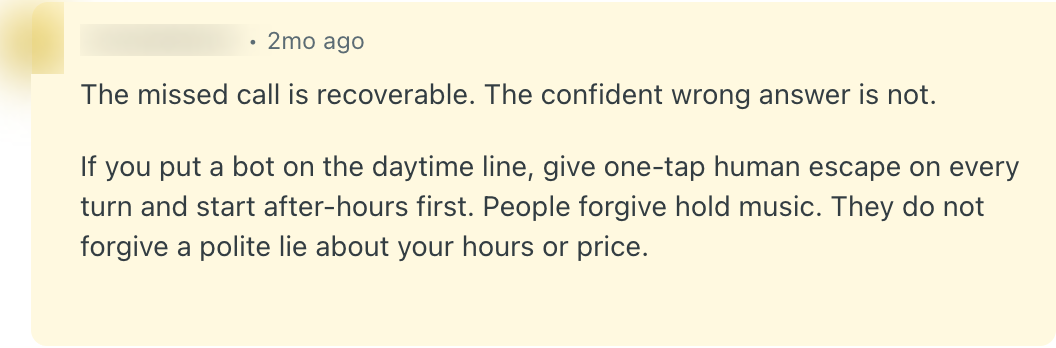
The fix is in the setup. Give it accurate information, tell it what not to quote, and have it take a message when it isn't sure.
Bad handoffs
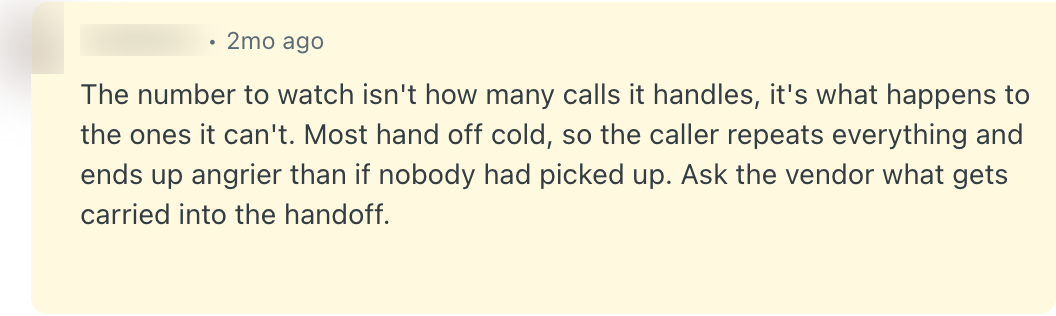
When the AI can't help, what happens next matters most. A cold transfer makes the caller start over with whoever picks up:
Names and addresses
Speech-to-text still struggles with surnames and street names, as the insulation company commenter above found. Keep the call recording, not just the transcript, and have the AI read details back to the caller.
How to choose an AI answering service
Ask every provider these questions before you sign up:
Most of these services have a free trial or free plan. Use it to call your own line as a customer would, including with an odd question it shouldn't know the answer to.
How to set up an AI answering service
Based on what owners say works, start small and widen it once you trust it:
Here's a greeting you can adapt:
Sample greeting
"Thanks for calling [Business Name], this is the team's AI assistant. I can answer questions, book an appointment or get a message to [Name]. How can I help?"
Zinng's AI answering service
Zinng is an AI answering service that answers your business line 24/7 in your business name. It answers questions from your website and FAQs, takes detailed messages, and transfers calls to you when needed.
Every call is recorded, transcribed and summarized in your inbox, and you get an alert after each one. Plans start at $49 a month for 300 minutes, with done-for-you setup and a 7-day free trial.
You can hear a demo built from your own website in about a minute. If you'd rather start with missed calls only, our after-hours answering service guide shows how.
Sources
All pages were checked and captured on October 26, 2026. None of the pricing pages shows a "last updated" date, so prices may have changed since.
- CallRail, missed-call blog post (June 4, 2026; vendor, no method given).
- Moneypenny, Small Business Call Report (November 21, 2016; vendor-commissioned).
- U.S. Chamber of Commerce, Empowering Small Business report (August 18, 2025).
- Pricing: Upfirst, Dialzara, Rosie, Goodcall, Smith.ai, Quo.
- How it works: public help centers of Rosie and Upfirst, linked where shown.
- Owner quotes: public Reddit threads in r/Entrepreneur and r/smallbusiness from 2026, linked where quoted. These are individual experiences, not research.
- Zinng: zinng.ai pricing.
FAQ
What is an AI answering service?
It's a phone answering service where software answers your calls instead of a person. It answers in your business name, answers common questions, takes messages, and can book appointments and transfer calls.
How much does an AI answering service cost?
Most small businesses pay $25 to $150 a month. Providers bill by the minute, the call or the unique caller, so compare what you'd pay for your real call volume, not the "starting at" price.
Is there a free AI answering service?
Smith.ai has a free AI plan for 25 calls a month, and Quo includes 10 AI-answered calls on its paid phone plans. Most others offer a free trial instead.
Will callers know they're talking to AI?
Usually, yes. Upfirst says most callers recognize it, and that saying so in the greeting led to fewer hang-ups in its testing.
Can an AI answering service book appointments?
Yes, if you connect your calendar, but not always on the cheapest plan. Rosie's booking starts at $149 a month, and some services text the caller a booking link instead.
How do I set up an AI answering service?
Sign up, give it your business information, then forward your business number to the number it gives you. Start with missed or after-hours calls and widen it once you've reviewed a week of transcripts.
Ready to get started?
Set up your AI phone agent in minutes. Try it free for 7 days.
Try Zinng Free for 7 Days
About the Author
Timothy Bramlett
Co-Founder & CEO, Zinng
Timothy Bramlett is an American entrepreneur, software engineer, and product strategist. He is the founder of Zinng, an AI-powered phone agent platform that helps businesses never miss a customer call with intelligent call handling, real-time transcripts, and instant summaries.