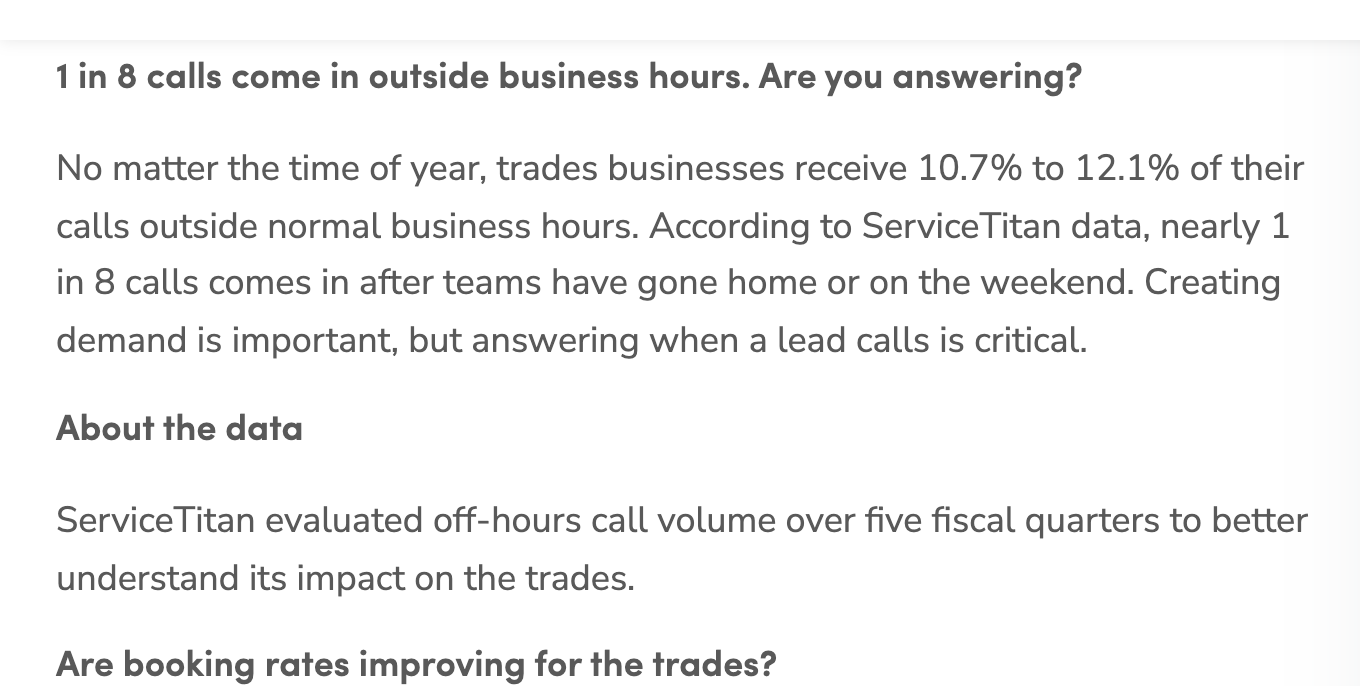
Nearly 1 in 8 calls to trades businesses comes in after the team has gone home, according to ServiceTitan's data on its own customers. What happens to those calls is up to you: voicemail, your cell phone, a live answering service, or an AI receptionist.
This guide compares all four on cost, coverage and what the caller actually gets. Prices are real, taken from providers' pricing pages in October 2026.
What is an after-hours answering service?
It's anything that answers your business line when you're closed, so callers reach a voice instead of a dead end. Traditionally that's a call center with live receptionists; today it can also be an AI agent.
A good one does three things: answers in your business name, takes the details you need, and gets true emergencies to you right away. Everything else can wait until morning.
How many calls come in after hours?
Fewer than vendors often claim, but enough to matter. ServiceTitan found that trades businesses get 10.7% to 12.1% of their calls outside normal hours, all year round.
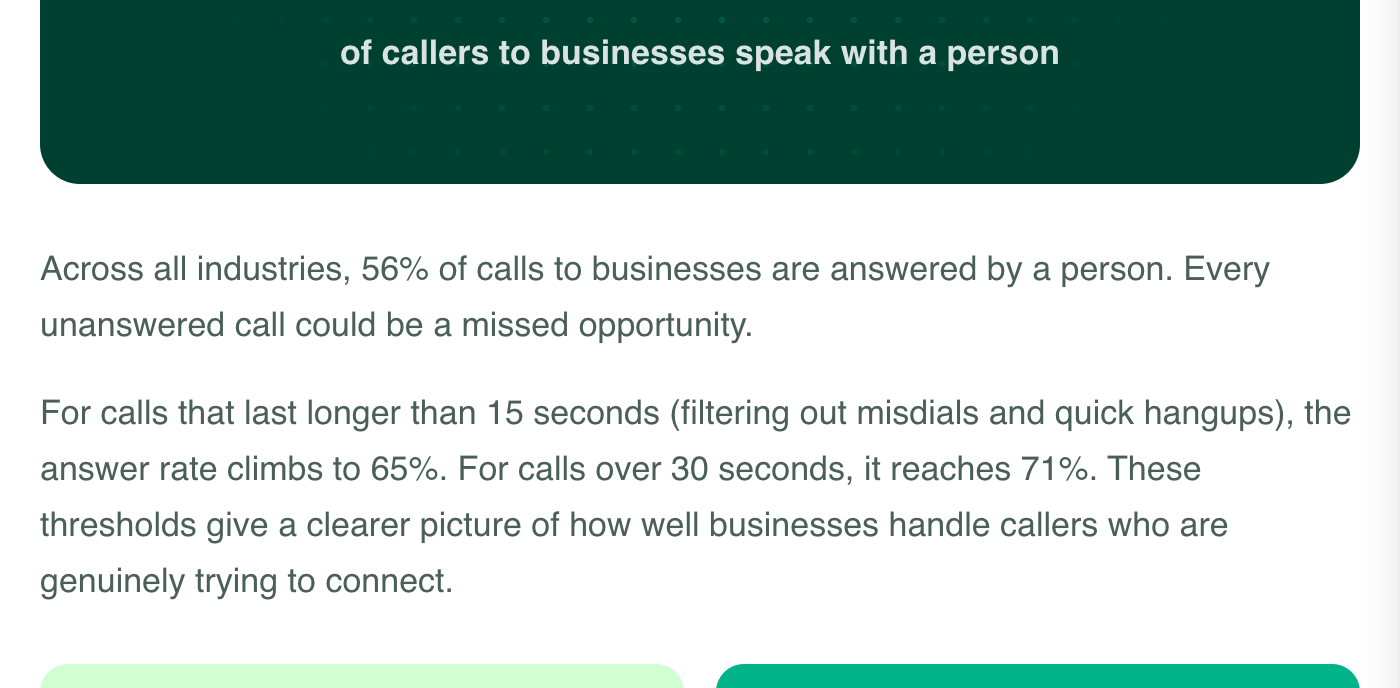
Those calls are often the urgent ones: a burst pipe, a lockout, a new client who just got served papers. And even during business hours, a person picks up only about half the time.
Want a rough dollar figure for your business? Our free after-hours lost revenue calculator estimates it from your call volume and average customer value.
Your 4 after-hours options compared
| Option | Monthly cost | What the caller gets | The catch |
|---|---|---|---|
| Voicemail | $0 | A recording | Most callers hang up without leaving a message |
| Forward to your cell | $0 | You, if you pick up | Every call, every night, including spam |
| Live answering service | $49 to $400, depending on minutes | A person who takes a message or patches urgent calls | Billed per minute; quality varies by agent |
| AI receptionist | Varies by provider (Zinng: $49) | A voice that answers questions, books, takes messages, transfers | Some callers want a human; needs good setup |
Many businesses combine them. A common setup is an answering service or AI agent for every call, with a transfer to an on-call phone only for emergencies.
Option 1: Voicemail
Voicemail is free and already set up. The problem is that most people won't use it.
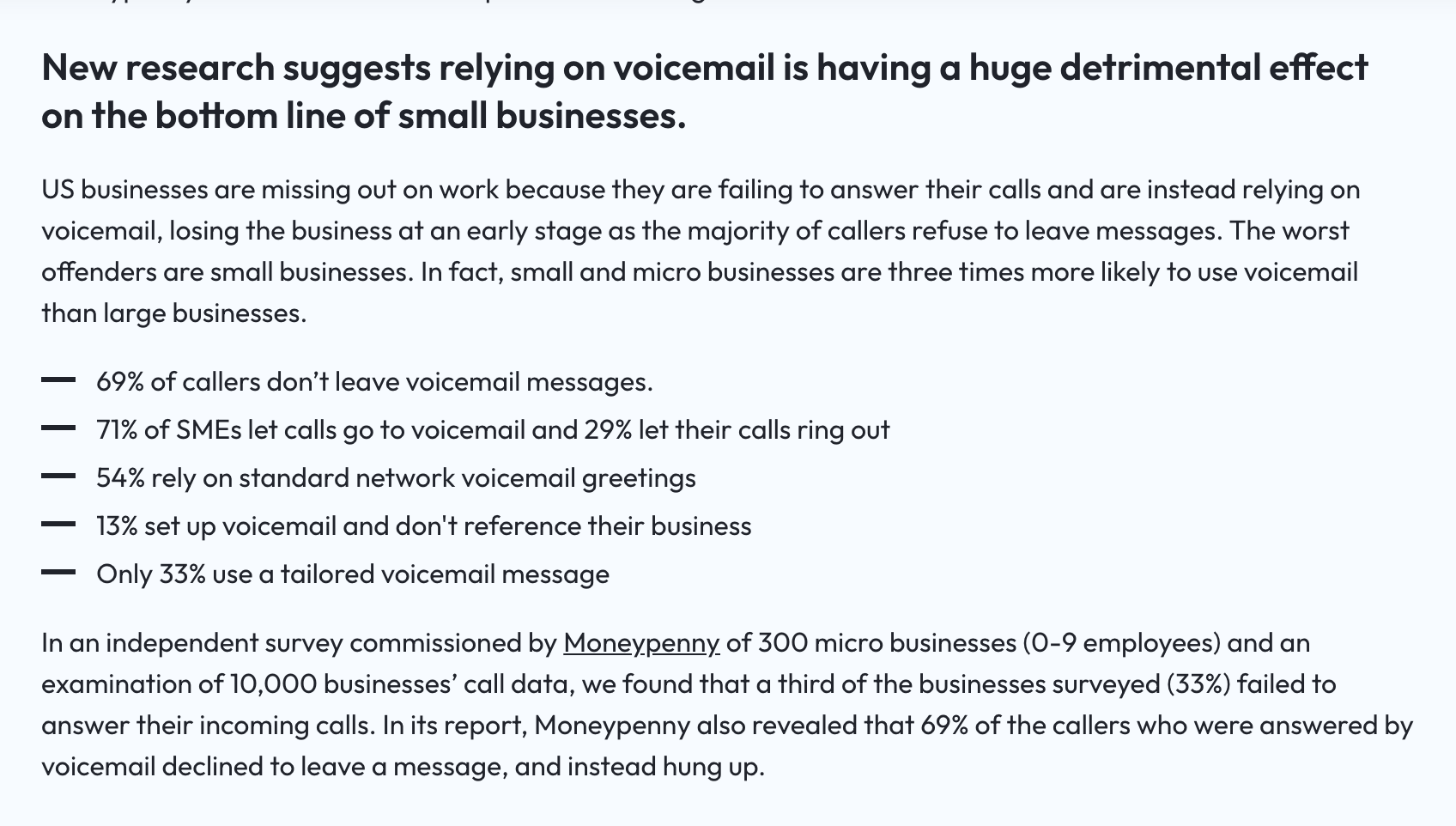
If you stick with voicemail, make the greeting do the work. Give your hours, say when you'll call back, and offer a way to reach you for emergencies.
Our business voicemail greeting scripts include after-hours versions. For more on caller behavior, see do people leave voicemails anymore.
Option 2: Forward calls to your cell
Forwarding your business line to your own phone at night costs nothing. Every carrier supports it with a short dial code.
It works if after-hours calls are rare and you're willing to answer them. It stops working the first week you get woken up by a spam call or a question that could have waited.
Look up your carrier's code with our call forwarding codes tool. One owner on Reddit describes a middle ground: the on-call person gets the first ring, and anything they miss rolls to a service.
Option 3: Live after-hours answering service
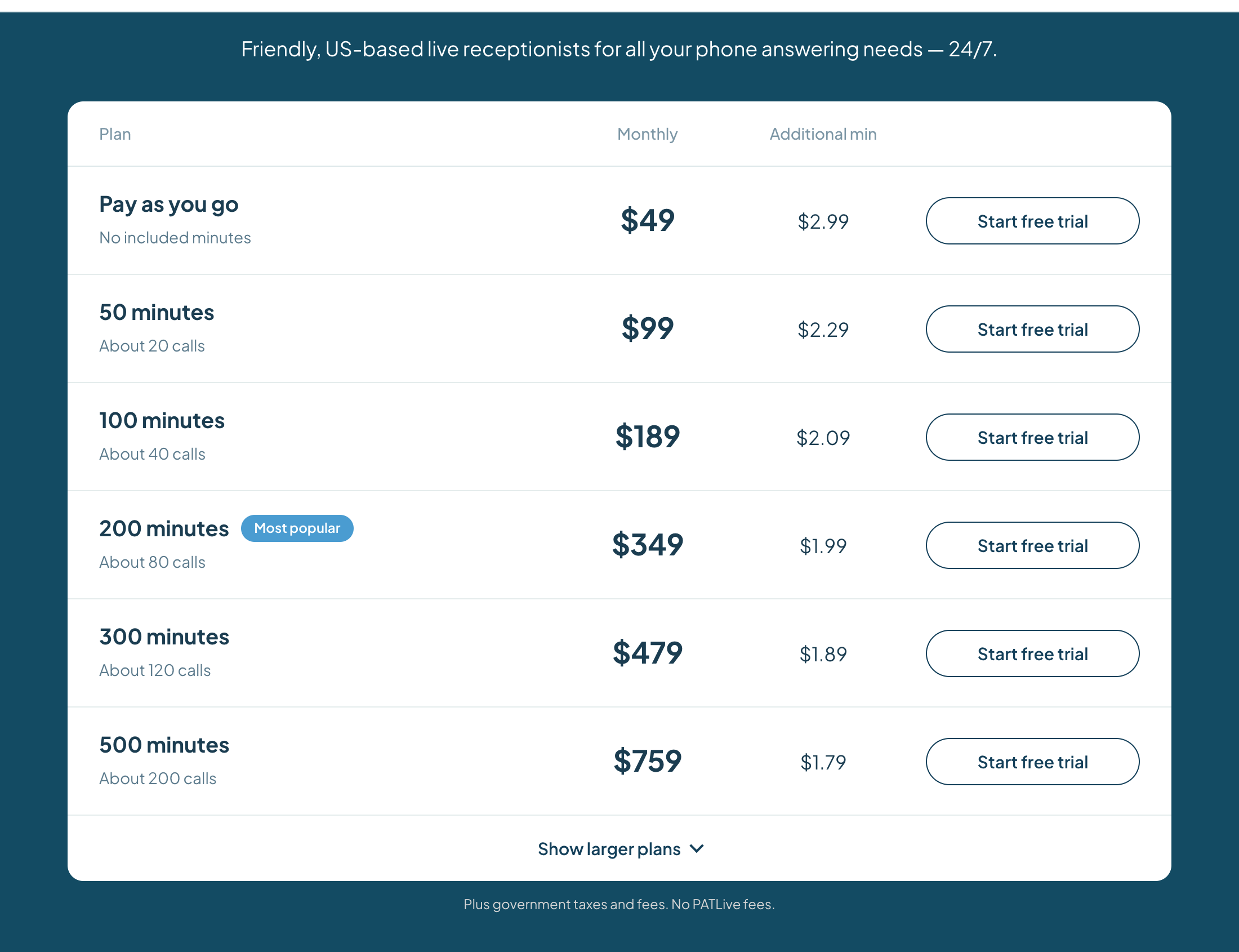
A live service gives callers a real person who answers in your name, takes a message and follows your instructions for urgent calls. These are the published prices from four well-known providers:
| Provider | Entry plan | Next plan up | Extra minutes | Nights and weekends |
|---|---|---|---|---|
| PATLive | $49, 0 minutes | $99, 50 minutes | $2.99 (entry) to $1.79 | Included |
| Map Communications | $49, 0 minutes | $179, 125 minutes | $1.37 to $1.28 | Included |
| Abby | $164, 50 minutes | $329, 100 minutes | At your plan's rate | Included |
| Ruby | $250, 50 minutes | $395, 100 minutes | Not published | Included |
Prices as shown on each provider's pricing page on October 24, 2026. PATLive adds government taxes and fees.
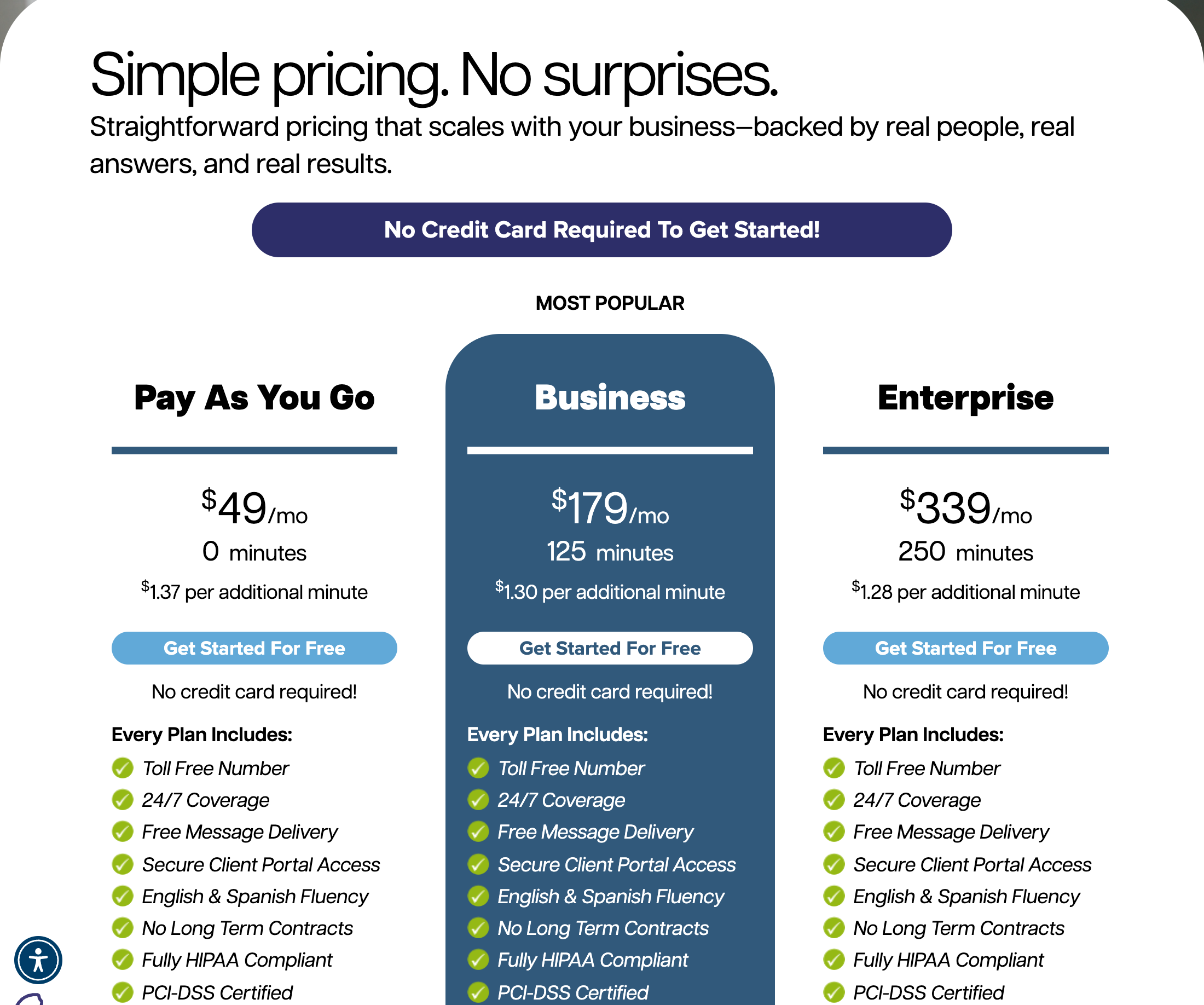
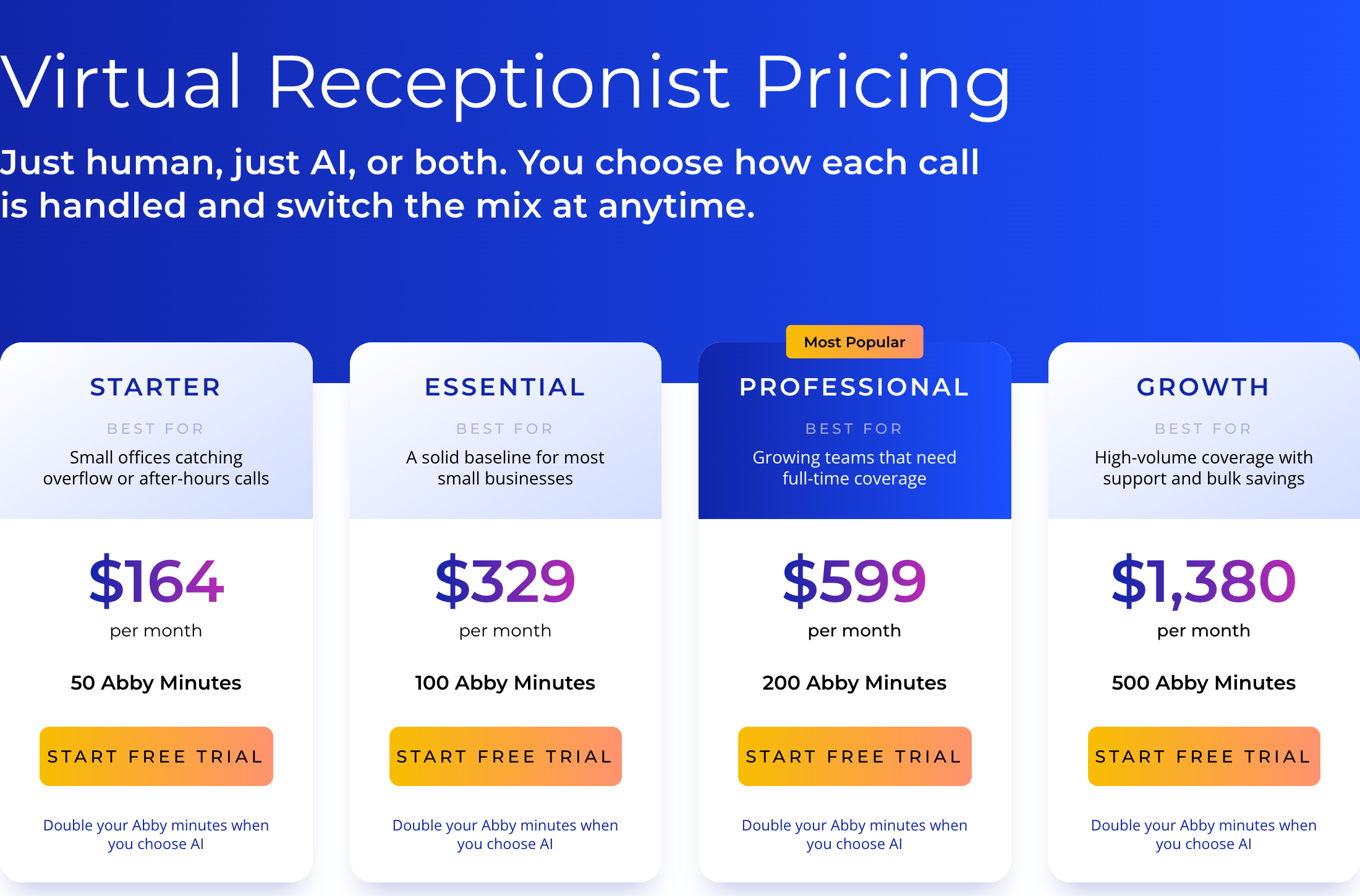
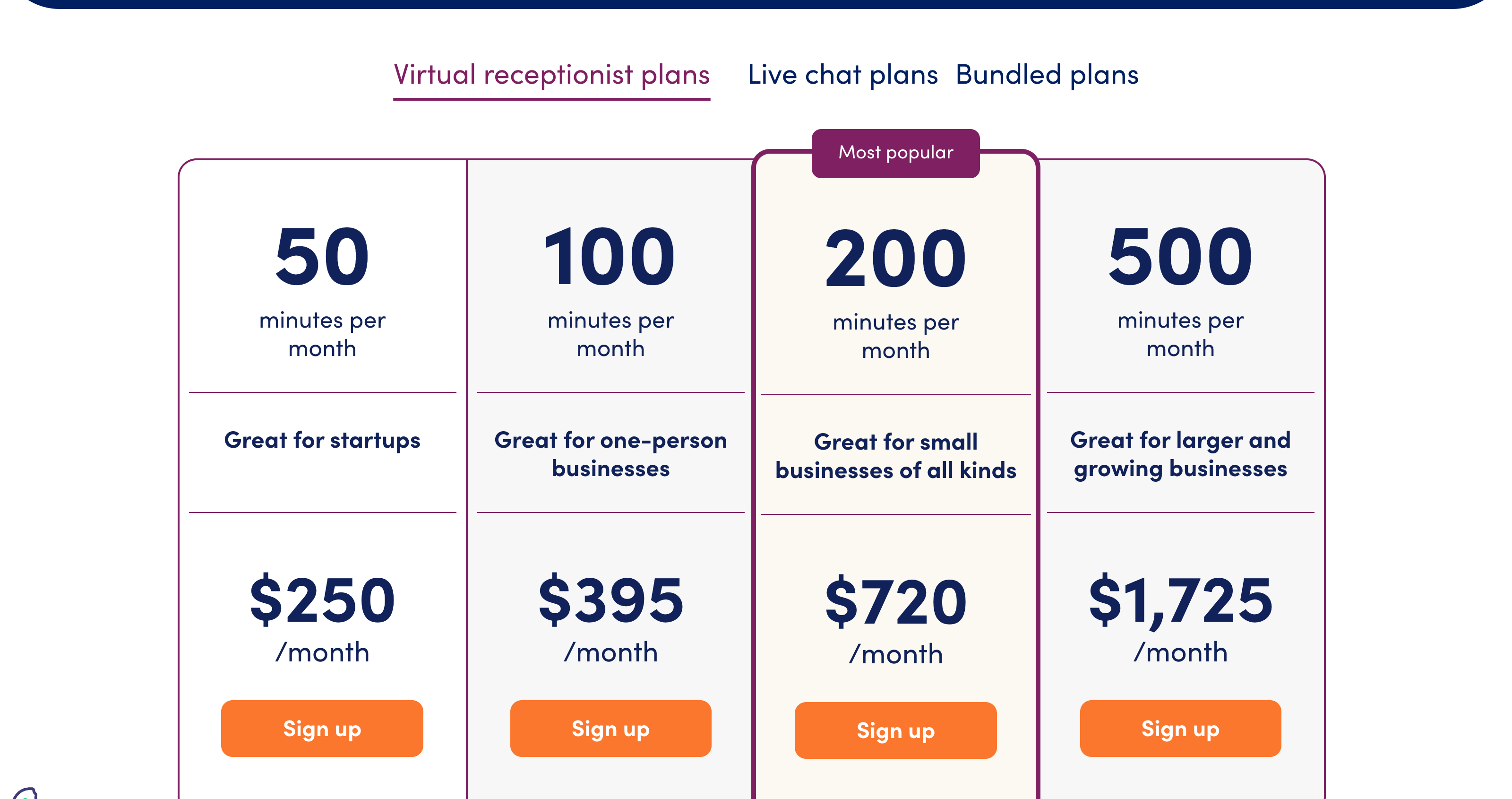
Three things to know before you sign up:
- You pay by the minute, not by the call. All four bill minutes, so a chatty caller costs more than a quick one.
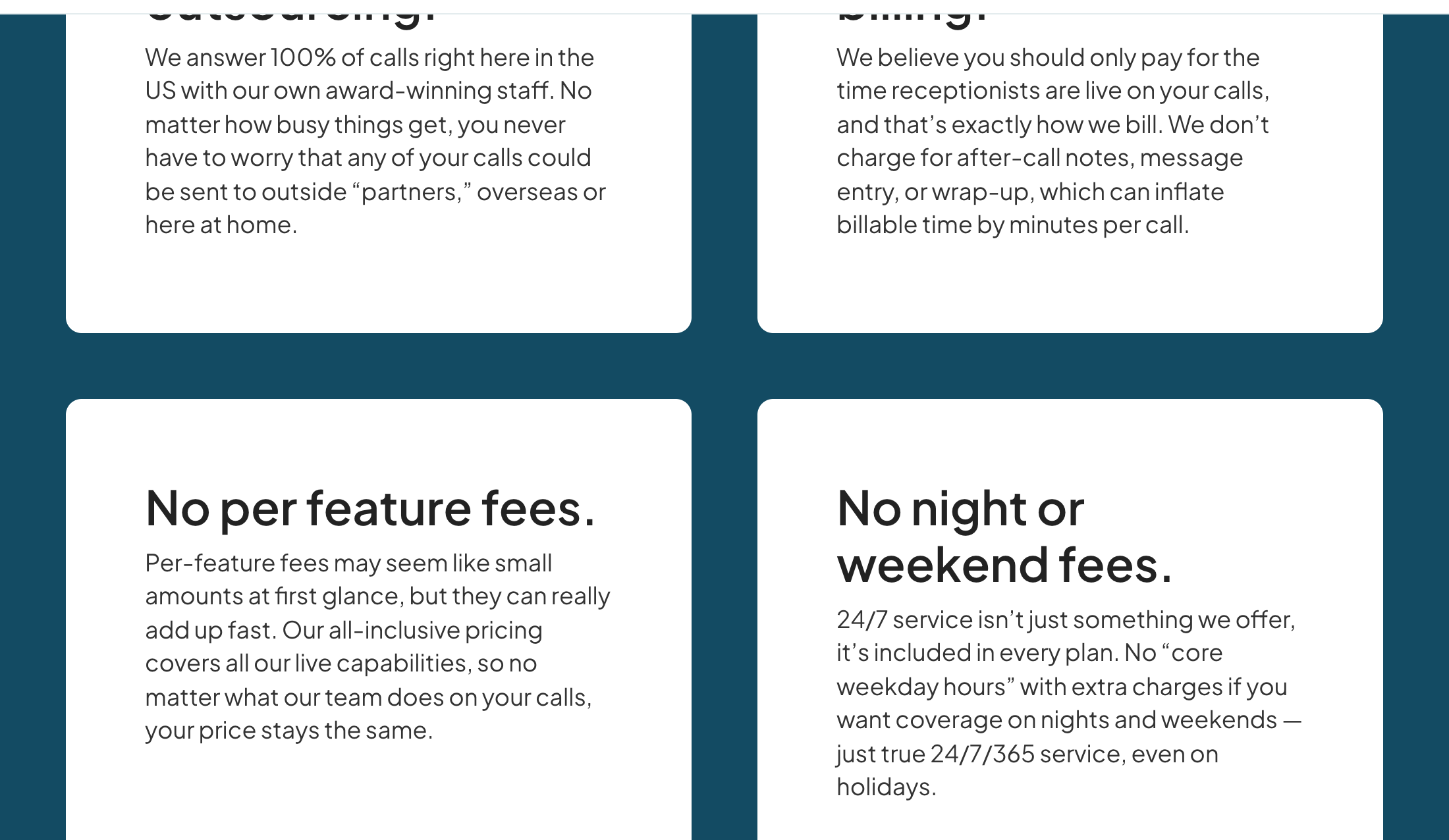
- Check what counts as a minute. PATLive says it bills only live talk time, with no charge for notes or wrap-up. Ask any other provider whether after-call work counts and whether they round up.
- After-hours surcharges are less common than you'd think. Some articles say services charge 25% to 50% more for nights, but all four providers above include 24/7 coverage at the same rate.
For more providers and prices, see the cheapest answering services, with 22 real prices. Our answering service cost guide breaks down every pricing model.
Option 4: AI receptionist
An AI receptionist answers every call with a natural voice, using information you give it about your business. It can answer common questions, book appointments, take a detailed message, and transfer urgent calls to your phone.
Because you're not paying for a person's time, it usually costs far less for the same coverage.
The tradeoff is that some callers would rather talk to a person, and a poorly set up agent will sound generic. Our guide to AI receptionist vs human cost compares the two in detail.
What 30 after-hours calls a month actually costs
Say you get 30 after-hours calls a month. PATLive says 50 minutes is "about 20 calls," so we'll use 2.5 minutes per call, or 75 minutes a month.
| Option | Plan that fits 75 minutes | Monthly cost |
|---|---|---|
| PATLive | 50 minutes + 25 extra at $2.29 | about $156 |
| Map Communications | Business, 125 minutes | $179 |
| Abby | Starter, 50 minutes + 25 extra at about $3.28 | about $246 |
| Ruby | 100 minutes | $395 |
| Zinng (AI) | 300 minutes, day and night | $49 |
Our math from published prices on October 24, 2026, before taxes. Abby's extra-minute rate is its Starter price divided by its minutes. Your real call length may differ.
If you only get a handful of calls a month, a pay-as-you-go plan can be cheapest. If after-hours calls are a steady stream, per-minute billing adds up fast.
What owners say about after-hours answering services
Owners who keep a service usually say one new customer a month pays for it:
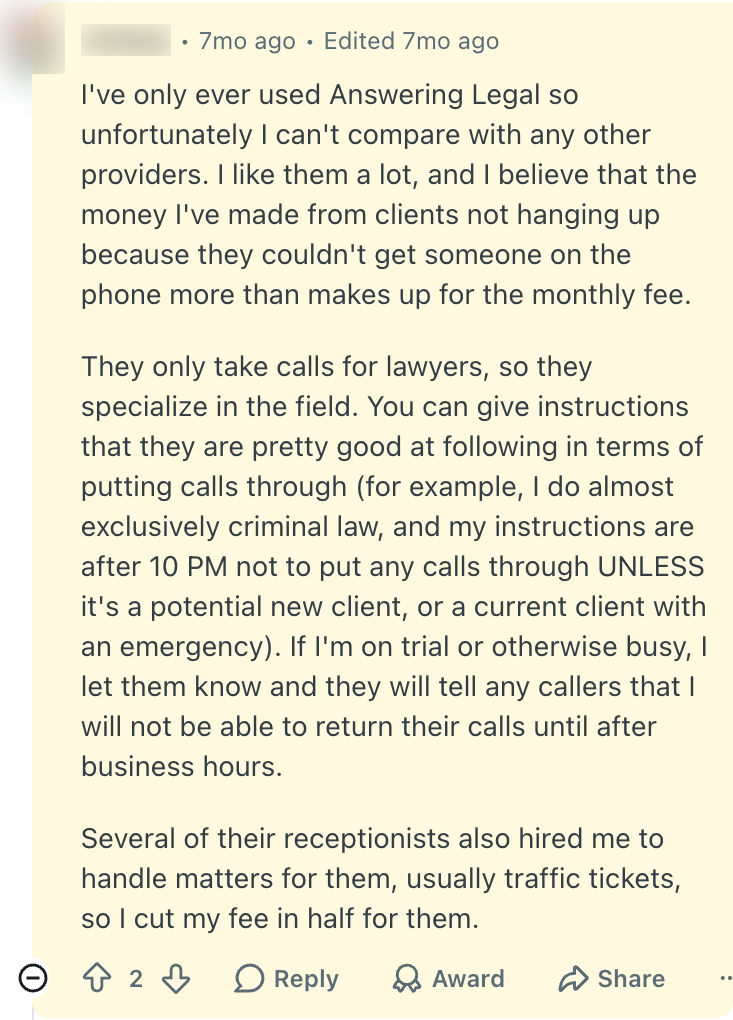
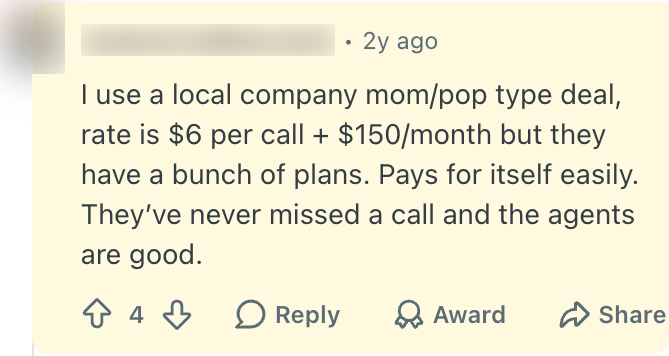
The value is in triage, as another commenter in the same thread put it:
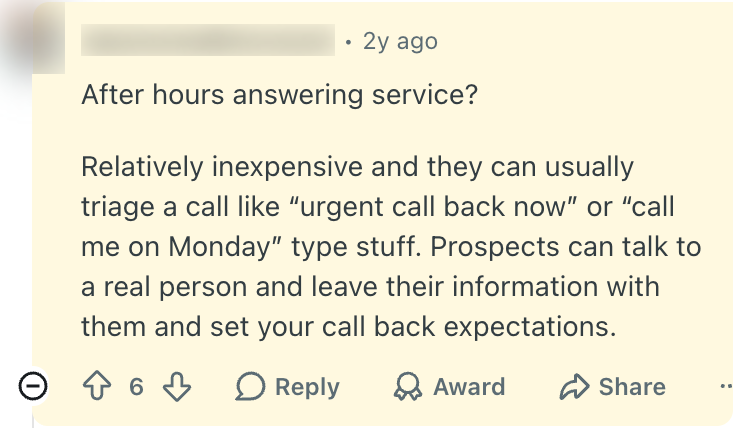
Not everyone is sold. One IT company dropped its service because quality varied, and one caller felt a message that waits until morning wasn't worth much:
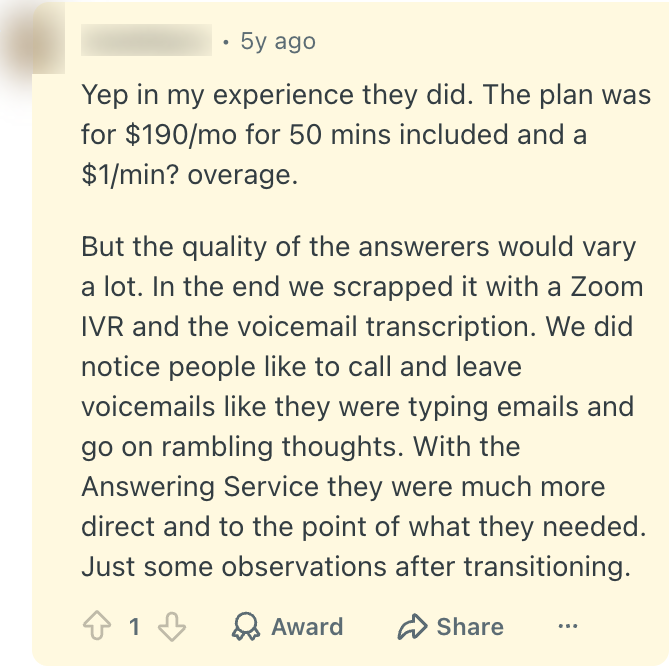
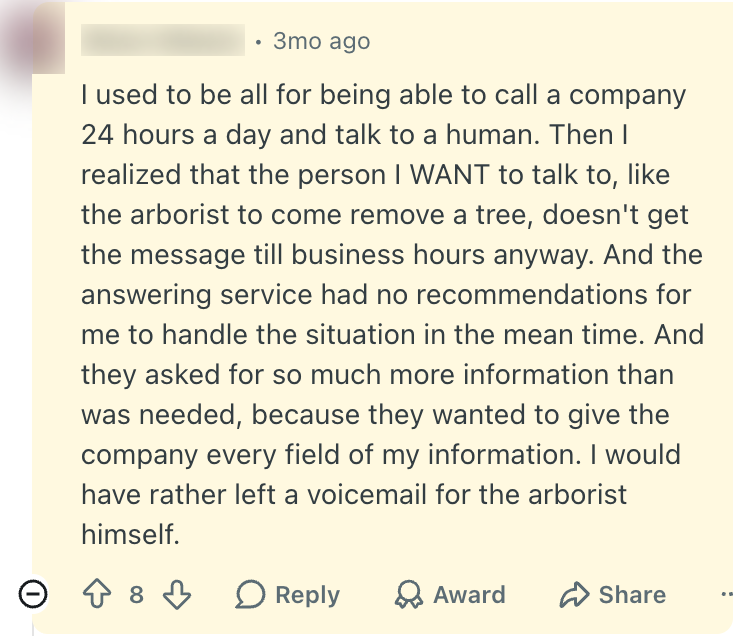
That second comment is the real lesson. Whoever answers needs to be able to help, not just write things down.
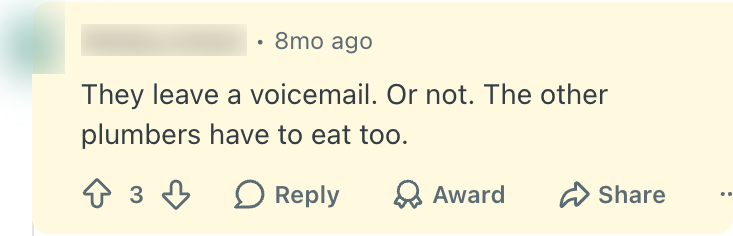
And if you skip coverage entirely, a plumbing owner summed up what happens next:
How to set up after-hours answering
Whichever option you choose, the setup is the same five decisions:
Here's a simple after-hours script you can hand to a service or load into an AI agent:
After-hours call script
Greeting: "Thanks for calling [Business Name]. Our office is closed right now, but I can help. What's going on?"
If it's an emergency: "That sounds urgent. Let me get you to our on-call [technician / attorney] right now. Can I confirm the best number to reach you if we get disconnected?"
If it can wait: "I'll make sure the team gets this first thing. Can I get your name, number and a quick description? We'll call you back by [9 a.m.]."
Safety line: "If anyone is in danger, please hang up and call 911."
Property managers have extra rules around emergencies and habitability. Our after-hours answering service for property management guide has a full call flow and script.
After-hours answering with Zinng
Zinng is an AI phone agent that answers your business line 24/7 in your business name. It answers questions from your website and FAQs, takes detailed messages, and warm-transfers true emergencies to your on-call person.
You get an alert after every call, so the morning callback list is waiting for you. Zinng starts at $49 a month for 300 minutes, with done-for-you setup and a 7-day free trial.
You can hear a demo built from your own website in about a minute.
Sources
All pages were checked and captured on October 24, 2026. None of the pricing pages shows a "last updated" date, so prices may have changed since.
- ServiceTitan, "Call Trends in the Trades" (ServiceTitan customer data, May 1, 2025 to July 31, 2026; vendor).
- Invoca, Lead Conversion Benchmarks Report 2026 (70 million+ calls, July 2026; vendor).
- Moneypenny, Small Business Call Report (November 21, 2016; vendor-commissioned).
- Pricing: PATLive, Map Communications, Abby, Ruby.
- Owner quotes: public Reddit threads in r/LawFirm, r/sweatystartup, r/msp, r/smallbusiness and r/Plumbing, linked where quoted. These are individual experiences from 2022 to 2026, not research.
- Zinng: zinng.ai pricing.
FAQ
What is an after-hours answering service?
It's a service that answers your business phone when you're closed, either with live receptionists or an AI agent. It takes messages, answers basic questions and passes emergencies to your on-call person.
How much does an after-hours answering service cost?
Live services start at $49 a month for pay-as-you-go minutes, and plans with included minutes run about $99 to $395 for 50 to 100 minutes. AI receptionists typically cost less; Zinng is $49 a month for 300 minutes.
Do answering services charge more for nights and weekends?
Some do, so ask. PATLive, Map Communications, Abby and Ruby all say 24/7 coverage is included at no extra cost on their pricing pages.
Is a 24-hour answering service the same as an after-hours service?
Mostly. A 24-hour service can answer any time, while "after-hours" just means you only send it calls when you're closed, usually by forwarding your line on a schedule.
How do I forward my calls to an answering service after hours?
Most providers give you a number to forward to. Set up scheduled forwarding in your phone system, or use your carrier's forwarding code each night.
Is an AI answering service good enough for after-hours calls?
For most small businesses, yes, if it's set up with your real information and transfer rules. It answers every call instantly and can transfer emergencies, though some callers will still ask for a person.
Ready to get started?
Set up your AI phone agent in minutes. Try it free for 7 days.
Try Zinng Free for 7 Days
About the Author
Timothy Bramlett
Co-Founder & CEO, Zinng
Timothy Bramlett is an American entrepreneur, software engineer, and product strategist. He is the founder of Zinng, an AI-powered phone agent platform that helps businesses never miss a customer call with intelligent call handling, real-time transcripts, and instant summaries.